
Esports: A Complete Guide to Competitive Gaming
Esports is competitive video gaming where players and teams battle for money, fame, and recognition, much like traditional sports.
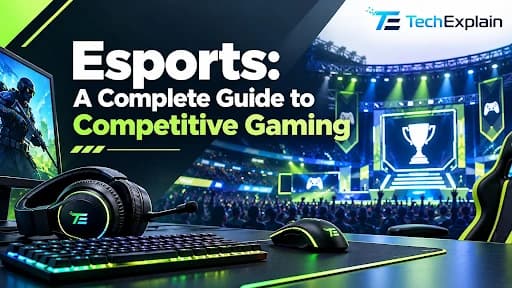
Esports is organized, competitive video gaming where individuals or teams play at a professional level for spectators, prizes, and entertainment.
Esports is a rapidly growing genre of modern entertainment, with many people participating in it not only as players and fans, but also as professionals trying to build their career in the industry. From small local game centers to giant arenas filled with passionate audiences, competitive gaming has become a worldwide phenomenon that almost equals the popularity of conventional sports. However, there are still many people who have no idea about the definition of esports, how it started, and the process through which an ordinary video game becomes a competitive event. This guide will provide a clear and concise answer to these questions, including the definition of esports, its history, types of games, and how it all works nowadays.
What Does 'Esports' Actually Mean?
Esports stands for electronic sports. By definition, esports refers to competitive video gaming. Instead of playing a game for fun in their homes, esports gamers engage in matches, tournaments, and leagues against each other. Esports often comes with a set of rules, referees, officially sanctioned teams, and rewards. It can be seen that esports has similarities with physical sports like football and cricket, where there are teams, coaches, practice routines, and tournaments involved. The only difference between the two forms of sports is that, in the case of esports, the field of play is the video game, while the equipment used is a keyboard and mouse.
Esports competitions can vary from small-scale local matches to large-scale international competitions involving millions of spectators watching over the Internet and large crowds at the event venues. Certain esports players, due to prize money, sponsorships, and revenues from live streams, manage to earn more than many professional athletes in conventional sports.
What Sort of Games Can Be an Esport?
However, not all video games qualify to be used in the world of esports. For instance, there are certain features that must be present for any video game to qualify to be part of the competitive electronic sports industry. In the first place, it must have a level of fair play where everyone plays fairly without anyone having any form of advantage from the start. Secondly, the game should be one that requires a lot of skill in order for the person to succeed in it. This will include strategic thinking, fast reactions, and practice. Thirdly, the video game must support multiplayer competition. It is good when the game is also spectator-friendly in that it is entertaining for the spectators. The popular types of gaming in e-sports include first-person shooters, multiplayer online battle arenas, real-time strategy, sports, fighting, and battle royale. These types of games will be analyzed in more detail below.
History and Development of Esports
Despite the perception that Esports is a current trend, there have been years of history behind it.
The Early Days (1970s–1980s)
The first-ever video game tournament took place in 1972 at Stanford University, where the players were playing the video game called Spacewar. In the 1980s, the era of arcade games came, when tournaments involving high score records in such video games as Pac-Man and Donkey Kong started appearing.
The Rise of LAN Gaming (1990s)
As personal computer technology advanced, players used Local Area Networks (LANs) to connect and compete against each other in games like Doom and Quake. The use of LAN parties became a popular way for gamers to meet and compete against each other in person.
The Internet Era (2000s)
With increasing connectivity on the Internet, there was a significant increase in the number of online games. Some popular titles, like StarCraft, became extremely popular in South Korea, where the concept of esports became a common form of entertainment.
The Streaming Boom (2010s)
Twitch and YouTube Gaming have made significant changes to the way people watch sporting events and games. People are able to watch live sports events in their living room. Games like LoL, Dota 2, and CS have managed to build a large fan base around the world, and prize money has reached millions of dollars.
Esports Today:
Esports has become a billion-dollar industry that features professional league organizations, university scholarships, national teams, and even talk of esports at the Olympic Games. Teams are sponsored by big companies, and there are esports stadiums where spectators attend live matches.
What Type of Games Are Played in Esports?
There are numerous genres in esports. Below is the list of the key ones that are usually contested internationally.
Game Genre | Description | Popular Examples |
First-Person Shooter (FPS) | Players compete using guns and tactics from a first-person view | Counter-Strike 2, Valorant, Call of Duty |
MOBA (Multiplayer Online Battle Arena) | Teams battle to destroy the opponent's base using unique characters | League of Legends, Dota 2 |
Battle Royale | Many players fight until one player or team survives | Fortnite, PUBG, Apex Legends |
Fighting Games | One-on-one combat requiring precise timing and combos | Street Fighter 6, Tekken 8 |
Sports Simulation | Digital versions of real sports | FIFA (EA Sports FC), NBA 2K |
Real-Time Strategy (RTS) | Players manage resources and armies to defeat opponents | StarCraft II |
Card and Strategy Games | Turn-based strategic battles using virtual cards or units | Hearthstone |
The type of audience that each genre pulls in is different, just like the skills needed to play it.
How Does a Game Become an Esport?
But not all popular games turn into esports. There is always a process, even if it unfolds naturally over time. It begins with the balanced design of the game, when the developers are sure that there are no superpowerful characters, weapons, or strategies, and competition becomes possible for everyone. The next step is the emergence of competition from the very community that organizes small tournaments either locally or online. Then, as the popularity of the game increases, the developer becomes interested in what is happening and supports the game with matchmaking, ranked or some other system that contributes to the development of competitiveness. Further development of such games involves proper tournaments and leagues that involve large-scale organization of competitions with referees, prize pools, and rules. The more popular the game becomes, the more sponsors and media join it by investing in it through streaming websites and sponsorships. And finally, professional teams appear, which include salaries for trainers and a training regime for the players, as in traditional sports.
Types of Esports
Another way to categorize esports is by its level and type of competition. In the initial stage, esports amateurs, or the grassroots level, can participate in local tournaments, school tournaments, and ladders online. Then, the next stage is semi-professional esports, which includes regional leagues where players compete for smaller rewards and recognition before becoming professionals. Professional esports includes the highest leagues where players sign contracts and earn significant sums of money from the prizes and sponsorships of the event. Also, international championships can be considered as an esports category, where all the best teams of different regions come together to compete at huge events like The International in Dota 2 or the League of Legends World Championship. Another rising trend in recent years is mobile esports, which is popular in certain regions, like Asia, where there are mobile games such as Mobile Legends and PUBG Mobile that attract many players. Lastly, university esports has gained more popularity, with inter-school and inter-university competitions, and some universities even grant scholarships to talented players.
How Do Esports Make Money?
There are many sources of funding and sponsorship for the industry that has become worth billions of dollars. Sponsorships make up one of the most significant income streams, as brands, ranging from energy drink companies to clothes manufacturers, provide funding in exchange for having their logo featured on jerseys, stages, and other broadcasts. The second income stream is media rights and broadcasting, which include payments from the platforms and TV networks for the broadcasting of live tournaments to the audience all over the world. The next income stream is related to advertising, which takes place both during live broadcasts and in-person tournaments. Ticket sales represent the additional income source that becomes significant when it comes to big championships taking place in major arenas with thousands of people attending in person. Game publishers are able to receive income from in-game purchases of various characters, skins, and other items, allowing fans to purchase something in order to support their favorite teams and players. Another income stream is represented by the sales of merchandise such as jerseys, accessories, and other branded products.
What Are Esports Players Competing For?
While playing computer games is often a hobby, esports players are fighting for tangible benefits that can affect their future career. First of all, these people compete for money because large competitions involve prize pools consisting of several million dollars that are divided between winning teams and players. Apart from prize money, players fight for contracts and salaries in various organizations where they can work for a certain wage, similarly to professional sportsmen working in clubs. Besides, ranking and prestige play a crucial role because climbing up to the top of regional or even worldwide ratings may lead to joining a better team, securing new sponsorships, and becoming famous across the globe. Moreover, many people are interested in representing their countries in world championships that provide them with the same feeling as the Olympic Games. Finally, players may strive to gain sponsorship and endorsement deals from different companies to be paid regularly for advertising gaming equipment, energy drinks, and other goods among fans.
Frequently Asked Questions
Is esports a real career?
Yes. Many people involved in esports can make a living from their activity by way of salaries, sponsorship deals, or streaming earnings.
Do you need special equipment to play esports?
A simple setup will be sufficient for general entertainment; However, professional gamers usually use gaming computers and special keyboards to achieve higher speeds and increased precision.
Which esports game is the most popular? Popularity is fickle; However, games such as LoL, CS 2, Dota 2, and Valorant always attract enormous fan bases throughout the world.
Can esports be part of the Olympics?
There has been continuous talk about whether esports should be an Olympic sport or not, and with the launch of the Olympic Esports Series, we can see that there is an increasing interest.
How do esports players make money?
The earning sources for players include tournament prize money, salaries from teams, sponsorships, donations from streams, and brand collaborations.
Final Thoughts
In contrast to simple arcade gaming tournaments focused on achieving the highest possible score, modern esports has reached an incredible level of development and has become a huge global business that hosts matches in stadiums and attracts millions of spectators online every day. What began as just a fun game between friends has transformed into a legitimate career option featuring coaches, training sessions, sponsorships, and worldwide competitions that are on par with those held in conventional sports. In order to make competitive gaming what it is nowadays, decades have passed, and numerous technologies have been developed, from basic LAN parties to super-fast internet and state-of-the-art streaming services. What makes competitive gaming so attractive and unique is the combination of the classic spirit of sport and creativity, strategy, and quick reflexes which are necessary when playing video games. No matter whether you like fast-paced shooters, deep and complicated MOBAs, realistic sports simulators, or fighting games, chances are high that there is a particular sport that will suit your preferences. It is another reason why esports has managed to gather such a huge and varied community of players.
Share this article
Related Articles
Best Free-to-Play PC Games in 2026
In 2026, you can play amazing PC games like Counter-Strike 2, Fortnite, and Warframe without paying anything.
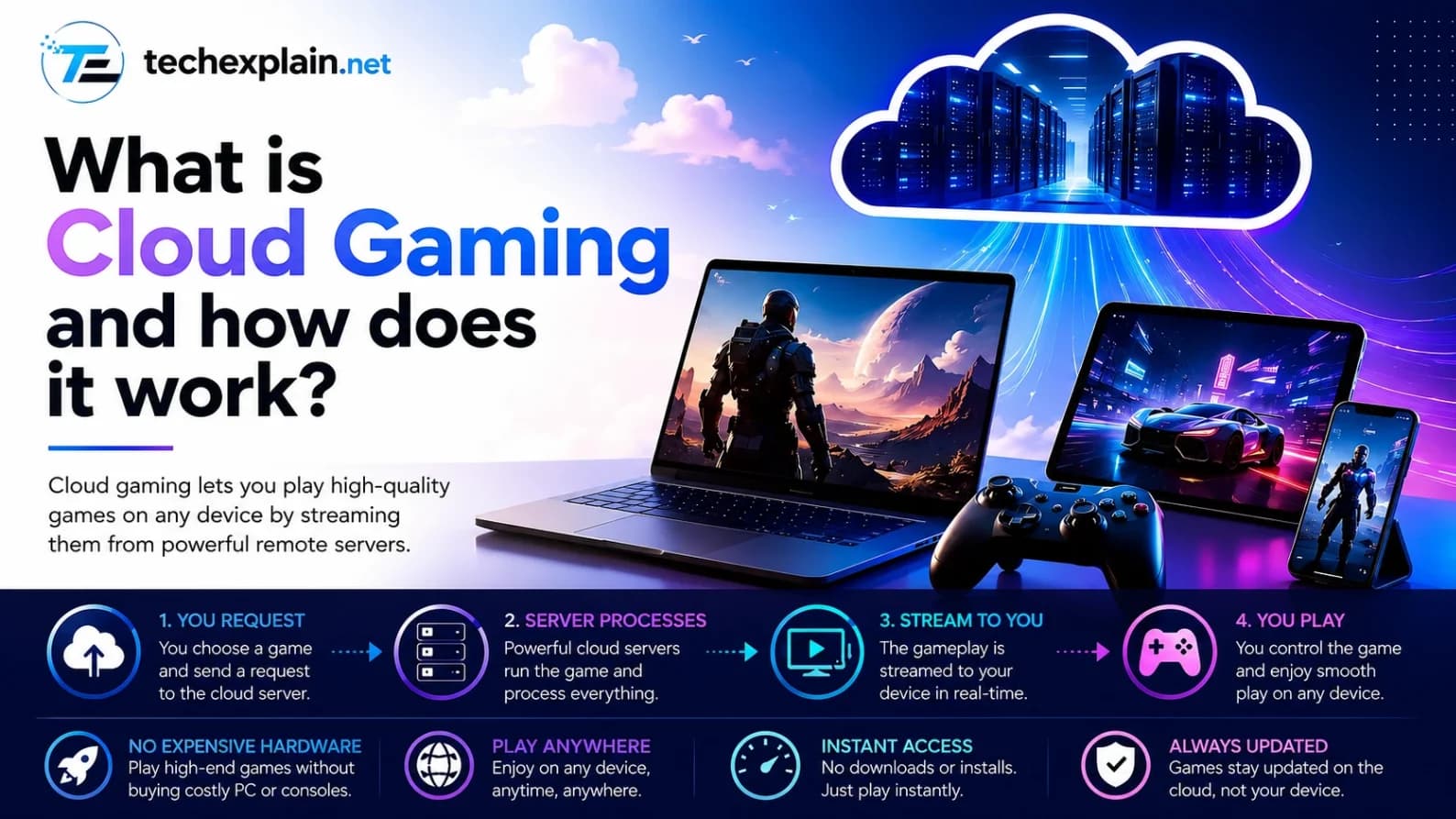
What Is Cloud Gaming and How Does It Work?
Cloud gaming lets you play games streamed from powerful remote servers, so you don't need expensive gaming hardware.
Online Games vs Offline Games: Pros and Cons
This guide explains online and offline games in easy words, so you can choose the right one for you or your kids.