5G vs Wi-Fi 6: Which Is Better for Your Devices?
5G is fast internet for outdoors and travel. Wi-Fi 6 is fast internet for home and office. Using both together works best.
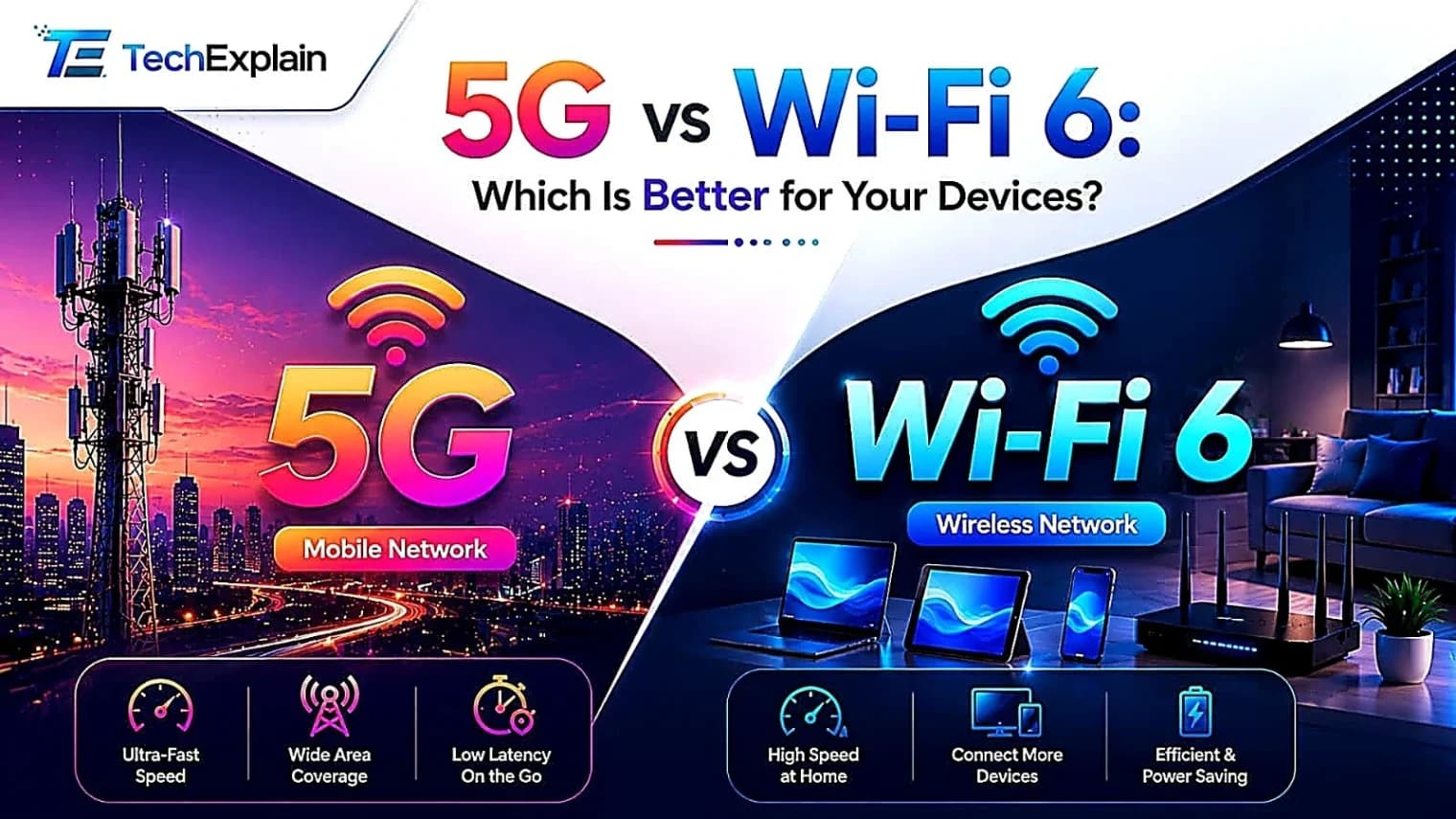
Wi-Fi 6 is better for local indoor device distribution, while 5G is better for wide-area mobile connectivity. They are complementary technologies rather than direct competitors.
5G and Wi-Fi 6 have been among the most notable advancements in modern wireless technologies. To those that have noted the emergence of the term "5G" in some situations while noting the "Wi-Fi" in others, this article seeks to give some clarity. In simple form, 5G is a mobile network that can be used outdoors to enable the mobile device to connect to cellular towers, while Wi-Fi 6 is an indoor network that helps to connect devices to a router. They are both fast networks with modern infrastructure that will ensure there are no disruptions in the connections and better streaming. However, the two networks cannot substitute each other, nor can any one of them be described as being better than the other at all times. The choice of either technology will depend on the geographical location, number of devices, and the needs of the connection. This article aims at understanding how 5G and Wi-Fi 6 work, comparing their speeds and latencies, and giving insights into their benefits and shortcomings.
What Is 5G?

5G acts as the replacement for 4G LTE technology and is designed to support much more data, many more connections, and significantly lower latency. The 5G technology consists of cell phone towers that relay the signal across long distances, thus making it more suitable for mobility in applications like walking, driving, and even traveling across cities. In ideal circumstances, the speed that can be achieved by using 5G is around 10 Gbps, which is a huge improvement from 4G LTE technology, which is around 1 Gbps. The higher bandwidth makes tasks like downloading an entire HD movie within seconds much easier.
Another benefit of 5G is that it comes with the provision of fixed-wireless service, whereby a residential antenna receives the 5G signal from the nearby cell tower and transforms it to home broadband internet service. The difference between fixed-wireless 5G and traditional fixed broadband is that there are no wires connecting the house to the main system. The real speed provided by fixed-wireless 5G services is about 300 Mbps.
What Is Wi-Fi 6?

Wi-Fi 6, which is alternatively referred to as 802.11ax, is the current technology used in the wireless standards of routers. It contrasts with 5G in that Wi-Fi 6 does not make the Internet on its own but needs another medium like cable, fiber, or a 5G connection that connects the Internet and distributes it wirelessly. The theoretical top speed of Wi-Fi 6 routers can be as high as 9.6 Gbps, similar to the maximum speeds provided by 5G. Real speed depends on the specifications of the router and the Internet plan used, as the speed will not be higher than the bandwidth provided by the Internet.
What makes Wi-Fi 6 unique is its efficiency apart from speed. Wi-Fi 6 uses Orthogonal Frequency-Division Multiple Access (OFDMA), which breaks down available bandwidth into smaller bands and allows multiple devices to send data at the same time instead of one after another. Hence, a house full of smartphones, laptops, smart televisions, and IoT devices will not have to compete with each other for access to the internet since they can all share the connection. Target Wake Time (TWT) is another feature offered by Wi-Fi 6 which allows devices to plan their active periods when they will receive or transmit data, hence saving on the energy required to power them—a useful addition for smartphones, tablets, and IoT sensors.
Speed Comparison
From a theoretical perspective, the maximum speeds that each technology can achieve are much closer than is generally assumed. The maximum speed achievable by 5G is roughly 10 Gbps, while that of Wi-Fi 6 is roughly 9.6 Gbps. However, when it comes to practical use, the actual speeds achieved by each are much lower because of various factors including network traffic, distance from the access point, physical obstacles, and bandwidth of the internet package itself. In general, 5G performs better outdoors and over large geographical distances like stadiums, college campuses, and streets, because of its cellular design meant to cover large areas. On the other hand, Wi-Fi 6 performs better indoors at home or in the office, where it can offer high-speed connectivity without the need for proximity to the cellular tower.
Latency: Why It Matters
Latency is the time gap between the sending of a request and receiving the answer, and it is measured in milliseconds. The lower the latency, the more immediate the perception of connectivity becomes, which is especially vital in applications like video conferencing, online games, virtual reality, and telemedicine. 5G excels in this feature because while 4G networks usually have a latency of 50 milliseconds, 5G plans to have a minimum latency of 1 millisecond. Wi-Fi 6 has also made improvements compared to its predecessor Wi-Fi 5 because the average latency has been reduced from 30 milliseconds to 20 milliseconds, and in some studies, the latency has been reported at 2–3 milliseconds. Similar principles are used by both 5G and Wi-Fi 6 technologies, like the use of OFDMA technology for effective bandwidth sharing and MIMO antenna technology for increasing the power of signals and avoiding interference.
Range and Coverage
This is one of the key areas where the two technologies differ. Being a cellular network, 5G is built in such a way that it covers vast distances, from a few hundred meters to even several kilometers away from the base station, depending on the frequency bands being used. Due to this nature, it makes it suitable for outdoor movement and for usage in large open spaces. However, the range of Wi-Fi 6 is shorter compared to 5G – approximately 50 meters indoors and up to 300 meters outdoors in unobstructed conditions.
5G vs Wi-Fi 6: Quick Comparison Table
Feature | 5G | Wi-Fi 6 |
Best for | Outdoor, mobile, wide-area use | Indoor, home, and office use |
Theoretical top speed | Up to ~10 Gbps | Up to ~9.6 Gbps |
Typical latency | As low as 1 ms | About 2–20 ms |
Coverage range | Hundreds of meters to ~2 km | ~50 m indoors, ~300 m outdoors |
Requires | A cellular data plan and tower access | An existing internet source (cable, fiber, or 5G) |
Device capacity | Very large, city-wide scale | High, optimized per building |
Security standard | Carrier-grade encryption | WPA3 |
Power efficiency | Depends on carrier and device | Improved via Target Wake Time (TWT) |
Which One Should You Choose?
The right answer is that this is not a case of either/or. 5G and Wi-Fi 6 have been designed to solve different problems, and in a large number of situations they work together rather than compete with each other. In situations where people are moving around—in commuting, traveling, or even working in a coffee shop without any Wi-Fi connection—5G allows phones or laptops to connect without having to use a router. On the other hand, when at home or at work, Wi-Fi 6 is faster and more stable, especially since there are many internet packages at home that don't allow the maximum speed of 5G.
In cases where mobility is key, and there is a continuous need to have internet connectivity outside home or office premises, then 5G would be the preferred choice. In situations whereby one wants to connect many devices simultaneously in a fixed location like smart TVs, laptops, gaming devices, surveillance cameras, and other smart-home devices, Wi-Fi 6 would be the better choice, provided that one has an appropriate router and a strong internet package.
However, many homes and companies have realized the benefits of mixing both, whereby they opt to utilize 5G for their incoming Internet connectivity (particularly in places where fiber or cable connectivity is hard or expensive to come by) and then connect this connectivity to the Wi-Fi 6 access point/router for distribution to all connected devices in the premises. This marriage of both technologies provides 5G mobility and range along with the speed of Wi-Fi 6.
The Road Ahead
Both are continually developing. 5G is becoming more widespread by extending its reach through additional deployment of mid-range and high-range frequencies, making it faster in real-life scenarios. At the same time, Wi-Fi is progressing through its next iterations, including Wi-Fi 6E, which utilizes the 6 GHz band and thus becomes less vulnerable to interference, and Wi-Fi 7, which offers an even faster performance and better efficiency. Companies like Qualcomm, Broadcom, and MediaTek keep releasing new chips capable of supporting such technologies, which means that in a few years your phones will operate these technologies better.
Common Questions People Ask
Does 5G replace the need for Wi-Fi at home?
No, not necessarily. Although you may be using a 5G cellular package with your smartphone, it does not mean that you should not have a Wi-Fi router in your house, as it will connect your laptop, smart television, gaming console, and any other device that does not have a built-in cellular modem. The 5G home internet will become the source that feeds the router.
Is Wi-Fi 6 worth upgrading to if my devices are older? Older devices which only work on Wi-Fi 5 or older will be able to connect to a Wi-Fi 6 router but will not be able to enjoy the features offered by the technology, such as OFDMA and Target Wake Time. However, the true power of Wi-Fi 6 can be seen when there are multiple Wi-Fi 6 enabled devices.
Will 5G ever fully replace Wi-Fi?
This is not anticipated by most industry experts in the immediate future. Wi-Fi continues to be less expensive to implement indoors; it uses no mobile data allowance and offers much more reliable internet speed indoors. Rather than having one replace the other, both will continue to be developed in conjunction with each other.
Conclusion
Unlike a rivalry between two competing technologies that fight for the same role, 5G and Wi-Fi 6 complement each other with unique roles in different areas of operation. When fast internet connectivity, high speed, and low latency are required, 5G works better, especially when mobile, wide area operations, or situations where there is no fixed broadband connection are involved. When connectivity of several devices in one place is required, Wi-Fi 6 comes in handy. Wi-Fi 6 offers efficient bandwidth usage in such an environment and enhanced security as well. In order to make use of all the capabilities of different devices and the Internet service provided, a good idea would be to take advantage of both technologies by using 5G for mobility and coverage and Wi-Fi 6 for fast local internet distribution.
Share this article
Related Articles
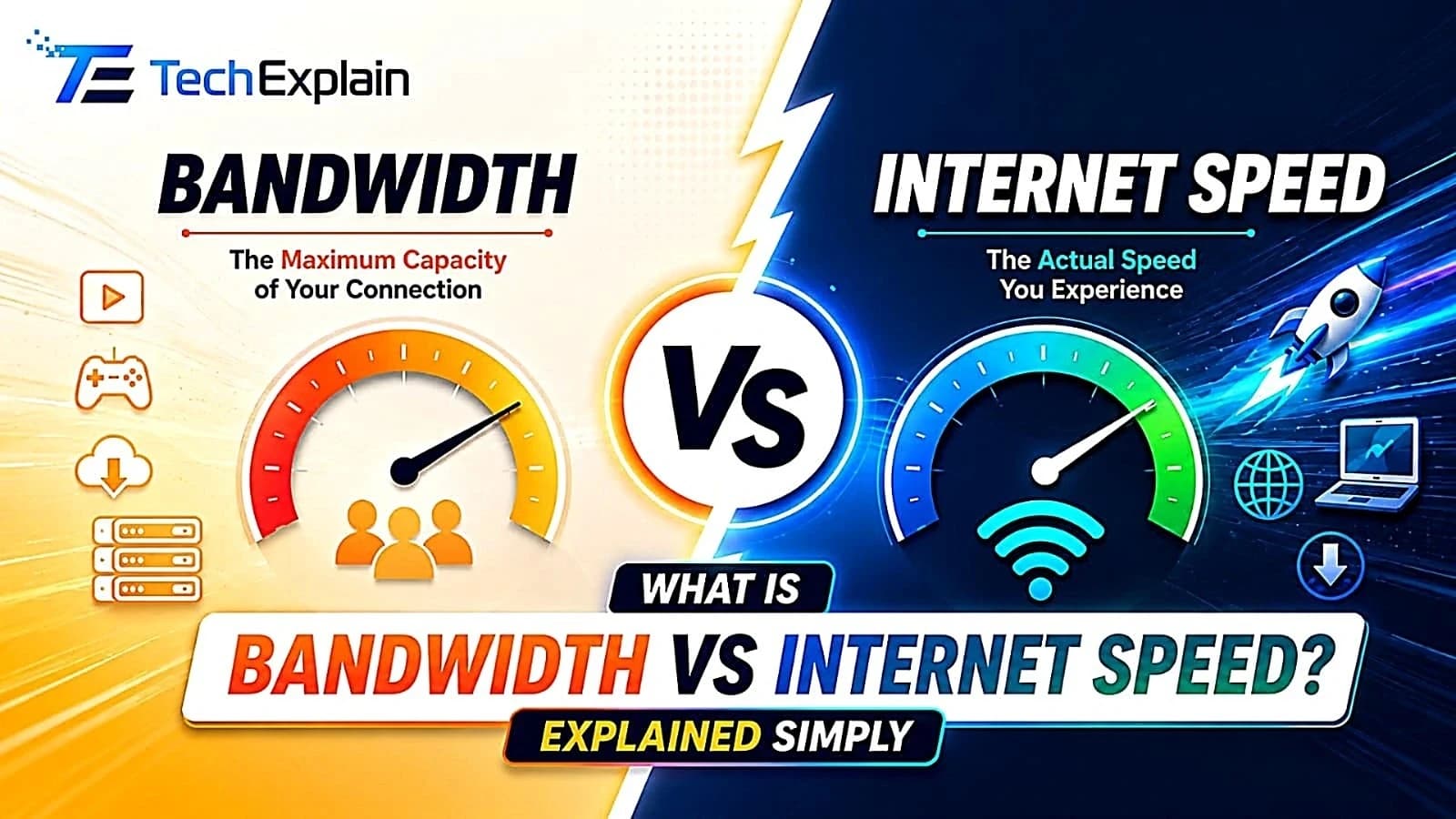
What Is Bandwidth vs Internet Speed? Explained Simply
Bandwidth is how much data your connection can carry, while speed is how fast that data actually moves.
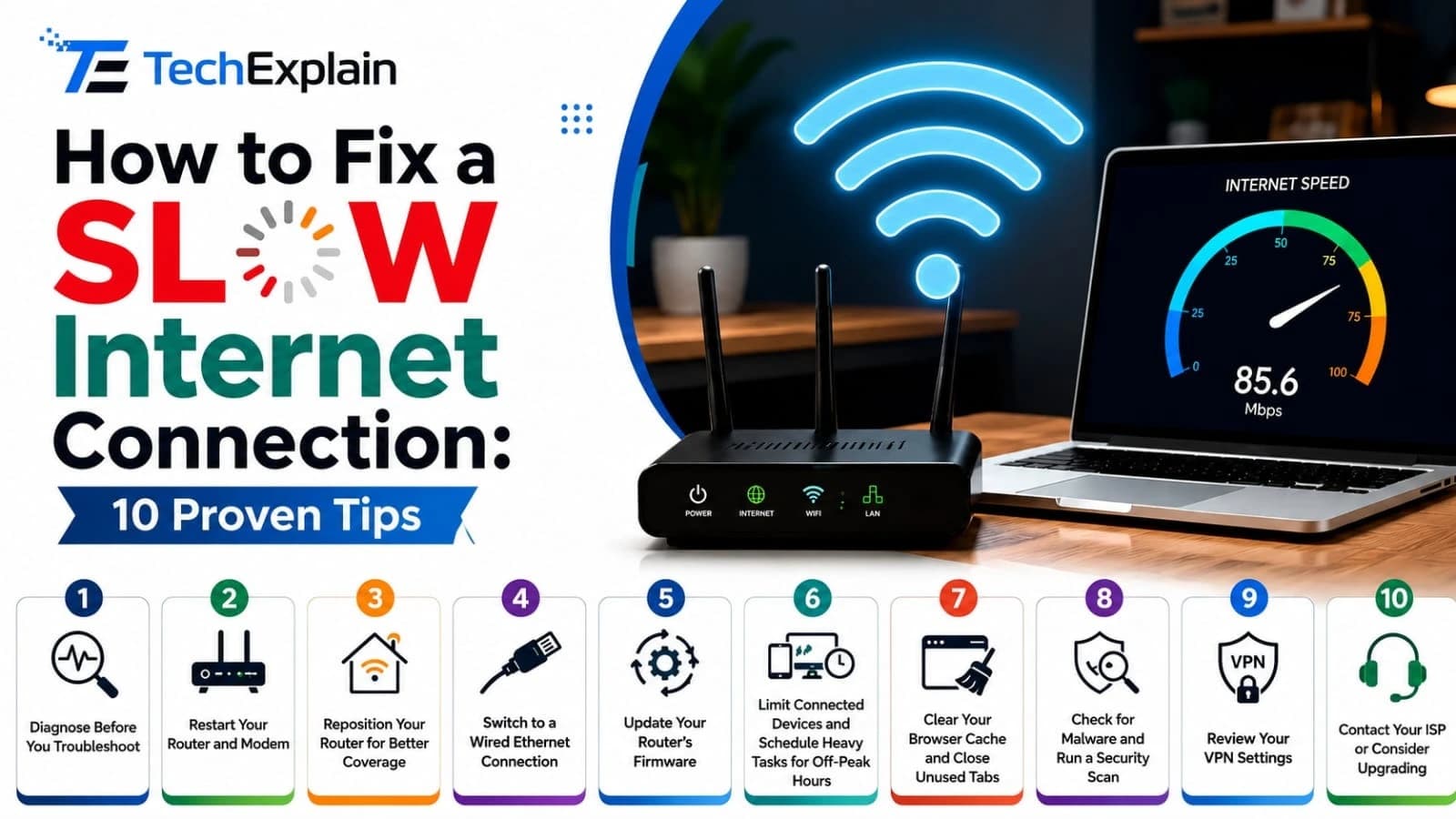
How to Fix a Slow Internet Connection: 10 Proven Tips
This guide shares 10 simple, tested tips to find out why your internet is slow and fix it fast.
Wi-Fi vs Ethernet: Which Connection Is Faster?
A simple guide comparing Wi-Fi and Ethernet to help you understand which connection is faster and when to use each one.