Future of AI: Opportunities and Risks
This article explains the good and bad sides of AI's future in simple terms — what it can do for us, and what dangers we need to watch out for.
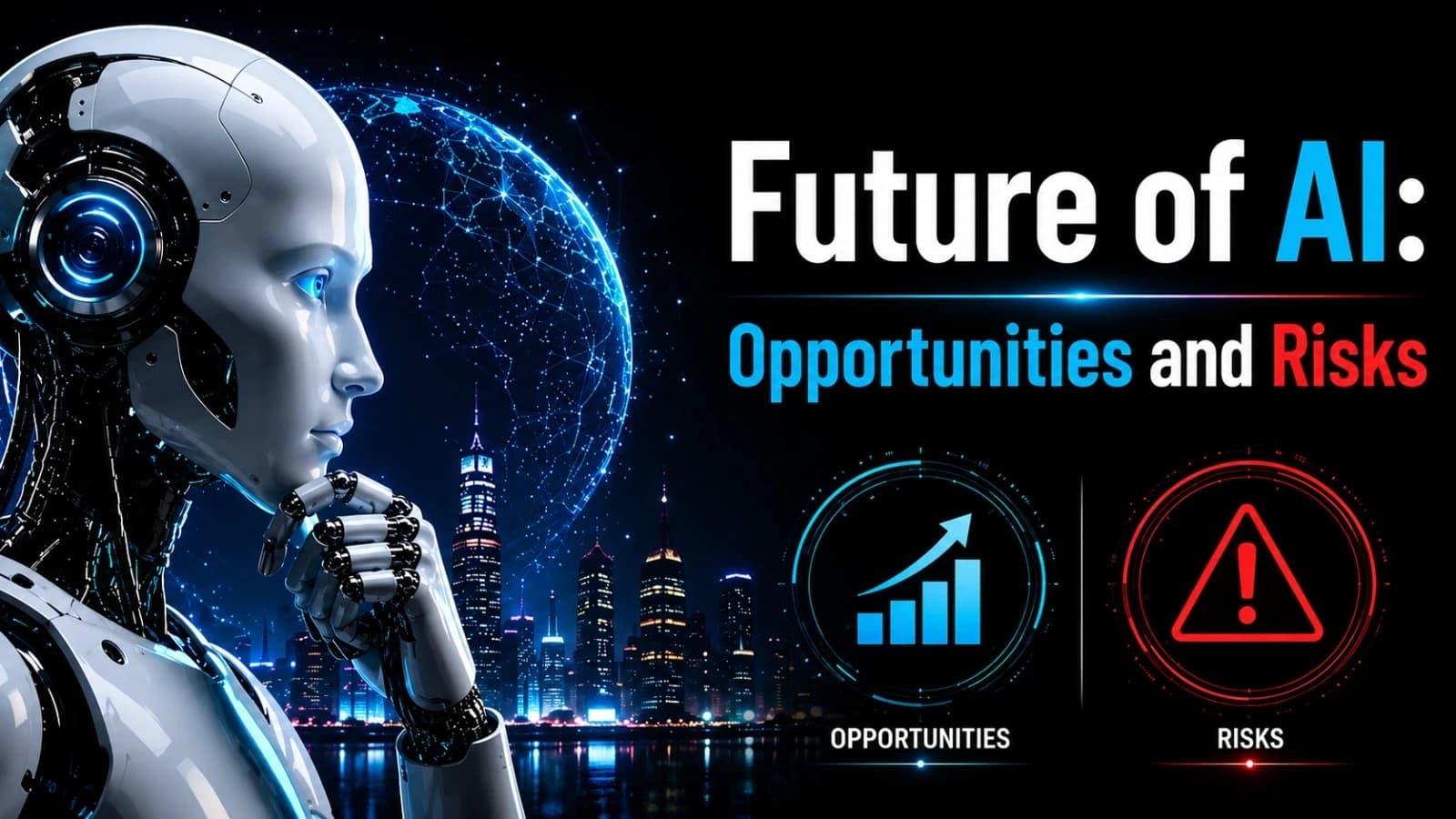
The future of artificial intelligence offers vast potential alongside critical challenges, driven by core benefits like accelerated innovation, major economic growth, and profound societal risks
AI is not merely a science-fiction creation anymore; it is a fact of our lives that has been integrated into our daily routines. Be it email management, medical diagnosis, self-driving cars, or even the apps on your phone, AI has started changing our lives. In its continuous development, AI comes with both possibilities and issues. Therefore, it is vital to know about the positives and negatives associated with it to make the right choices in one’s career and business.
What Is Driving the Rapid Growth of AI Today

The power of AI did not emerge all of a sudden; it is an outcome of three simultaneous events: large data sets, more affordable and faster computing abilities, and algorithms that learn by pattern recognition rather than strict instructions. Thanks to cloud computing, such technologies are available even to those who do not have access to large IT companies. Anyone, from startups to hospitals, schools, and small business entities, is able to benefit from it.
This development is significant since it implies that AI is not restricted to the Valley anymore. It is being used in farm machinery, retail software, customer support chatbots, household appliances and more. Technology is moving ahead faster than any kind of legislation or awareness, which is precisely why it is crucial to be talking about opportunities and challenges.
Major Opportunities AI Brings to Businesses and Individuals
The good thing about artificial intelligence is that it is immense, and affects almost all industries.
Healthcare One of the industries which has greatly benefited from the use of artificial intelligence is the healthcare industry. The technology is capable of analyzing medical images accurately, detecting the early symptoms of various illnesses, and assisting doctors in coming up with treatment methods customized for each individual.
Business efficiency The other big advantage is automation. Using AI for repetitive functions such as data entry, scheduling, and even handling customers makes employees available for more creative and strategic roles. The biggest advantage for small businesses here is that AI technology enables them to compete against larger organizations despite their smaller size.
Education Education is now being transformed with the use of personalized learning with the help of AI-based software that can modify the lesson depending on the speed and style of the learner.
Creative industries are also witnessing new opportunities. Through the use of AI, writers, designers, and marketers are able to generate ideas, write rough drafts and shorten production times so that more effort can be devoted to polishing the ideas..
Job creation Another opportunity that might be less obvious but equally significant is the creation of jobs that have been generated by AI. As AI makes some jobs obsolete, it opens doors for new jobs in developing AI systems, analyzing data, overseeing the ethics of AI applications, and maintaining AI systems.
Agriculture and manufacturing However, these groups are some of the biggest beneficiaries without realizing it. Through sensors and predictive modeling, farmers can accurately time the irrigation, fertilization, and harvesting processes.
Scientific research is also speeding up. The power of AI algorithms lies in their ability to analyze huge datasets, be it related to climate patterns or genetic codes, and find links that could take years for humans to figure out.
AI and the Job Market: What the Data Really Shows
According to research that is conducted through the analysis of job vacancies in job advertisements, the need for the skills related to AI is growing as companies tend to hire specialists who will be able to work with AI technologies. The demand for such specialists has been growing with time. According to labor market research, however, the influence of AI on employment tends to depend on the size of a firm. While small firms claim the positive effect of hiring, large firms reduce some positions due to AI use.
The effects of artificial intelligence in the workforce are industry-specific, depending on both the type of work and the geographic location. The most affected jobs are those at the entry level, since there are several routine activities that have been automated by AI technology. While it is true that certain jobs have declined in number as a result of AI technology, forecasts for future employment indicate that AI technology is expected to create more jobs than it destroys. Many labor analysts agree that AI is not likely to destroy entire occupations but merely automate certain duties within the job itself.
Curiously enough, positions that require a physical presence, as well as problem-solving capabilities, such as electricians, plumbers, or construction managers, are unlikely to feel the effects of AI and will keep flourishing due to infrastructure requirements and demographic factors, not due to automation.
The Real Risks and Challenges We Cannot Ignore
In addition to the positive effects, there are also difficulties that should be acknowledged.
Job displacement Automation is a legitimate threat.. Although new jobs are being created, there are issues surrounding this process, and workers who lack training opportunities face difficulties in this regard.
Bias and fairness The problems are inherent in most artificial intelligence systems since they train on historical data that is tainted by human biases. If not controlled, the consequences can be devastating in areas like hiring, loans, policing, among others.
Privacy concerns As artificial intelligence depends on huge amounts of data, personal information included, concerns about monitoring, privacy of information, and the level of control people exercise over their own information emerge.
Misinformation and synthetic media It is getting more and more difficult to distinguish between misinformation and synthetic media.
Security risksThey are also increasing as cyber-criminals leverage artificial intelligence in creating sophisticated attacks that are more difficult to detect.
Governance gaps still pose one of the greatest structural risks. The capabilities of AI technology have advanced more rapidly than the policies and audits that are required to govern them effectively. This has created one of the major characteristics of this age.
Skills gaps inside organizations are also delaying the safe implementation. It is common for many firms to say that they do not currently feel prepared enough to incorporate AI in their work processes, mostly due to the lack of relevant expertise. The significance of this is that deploying AI without sufficient expertise often leads to the very issues mentioned above.
How Businesses and Individuals Can Prepare for What's Next

Instead of being afraid of AI or implementing it indiscriminately, it would be wiser to prepare for it.
This means for organizations that they should train their employees about AI literacy. If the employees know about the functionality of AI technologies, then they can be able to operate them in a way that is correct and detect errors. Organizations should also develop effective governance mechanisms for AI systems, such as audit before deployment for any bias or inaccuracies.
On an individual level, the best way to proceed is by being adaptable. Instead of pitting oneself against the artificial intelligence technology that has emerged, learning to function with it is more likely to create job possibilities. Some basic understanding of the workings of the algorithms used in the technology helps individuals guard against disinformation and data theft.
There is a need for regulators as well. Efficient regulations do not entail stifling innovation; they include setting up mechanisms that promote public trust without denying useful technology access to those who require it. Most experts believe that the use of flexible and case-by-case regulations is much better than the “one size fits all” approach.
Frequently Asked Essential Skills for an AI-Powered Future
Is AI dangerous to society? AI technology in itself is not harmful; However, the way AI is designed, used, and regulated will determine the degree of harm that can be caused. Bias, misuse, and lack of regulation are what pose a threat to society.
How can businesses use AI responsibly? Go slowly, test carefully, and add human judgment to important decisions. Being open about how AI technologies are applied and doing ongoing testing for biases and accuracy helps create trust with customers and staff.
Essential Skills for an AI-Powered Future Being adaptable, a good critical thinker, and technologically literate will be more important than having knowledge of a particular set of tools, as the tools will constantly change.
Final Thoughts: Balancing Innovation With Responsibility
It is not a tale of humans being replaced by robots and instant utopia. It is a tale of balancing the advantages that AI brings to the table through quick diagnosis and advanced technology with the harsh reality of bias, privacy issues, false information, and the speed at which technology advances faster than anyone can keep up with it.
The groups and individuals who will succeed in the coming years will not be those who overlook AI or run after every single new development without giving it much thought. They will be those who remain aware and ask difficult questions regarding their use of AI as a tool of power.
Share this article
Related Articles
7 Examples of Artificial Intelligence Applications in Our Daily Lives
This article explains what AI is in easy words and shows 7 ways you already use it every day.
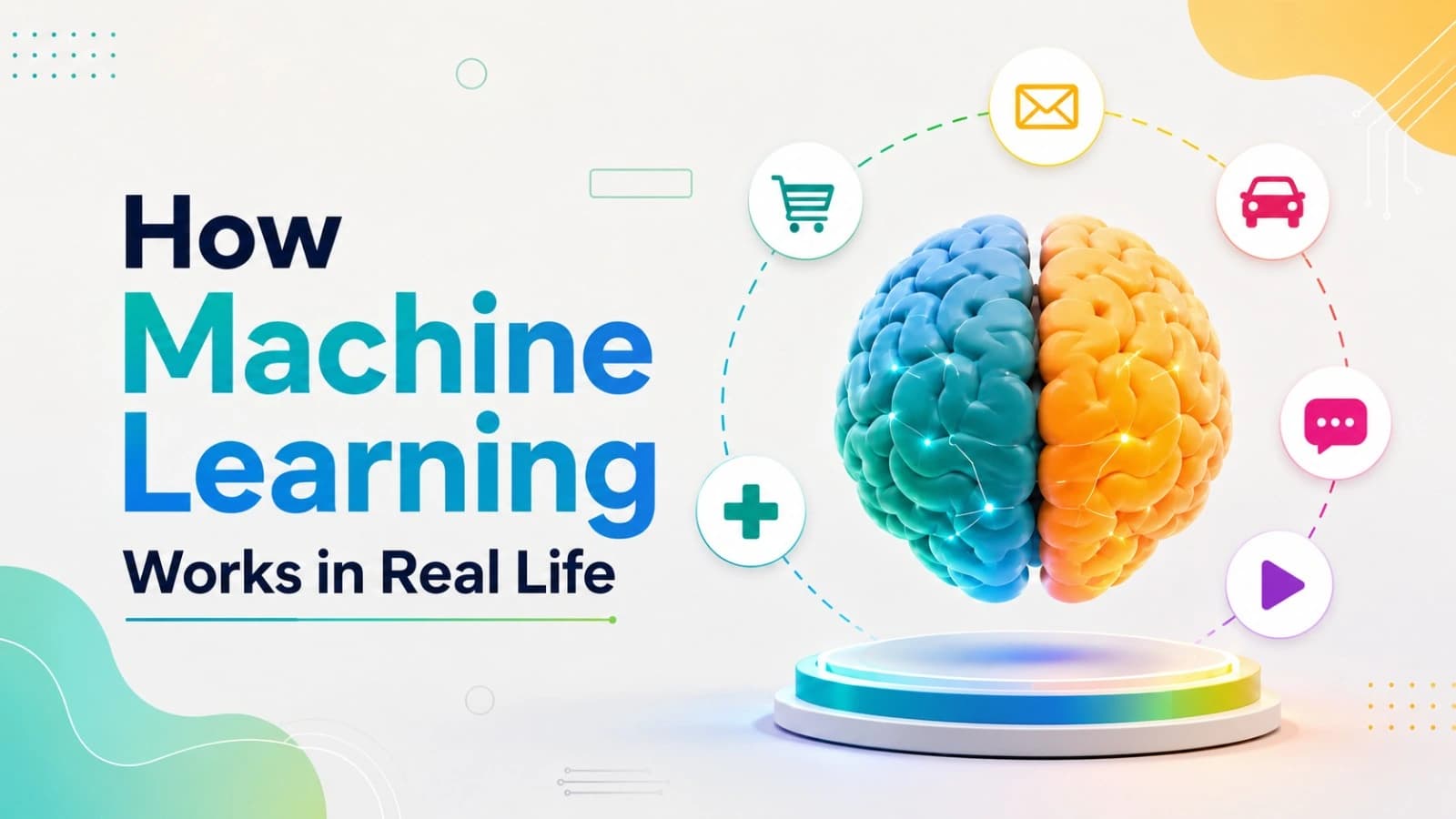
How Machine Learning Works in Real Life
Machine learning is a branch of artificial intelligence that learns from data, identifies patterns, and continuously improves its predictions without being explicitly programmed for every task.
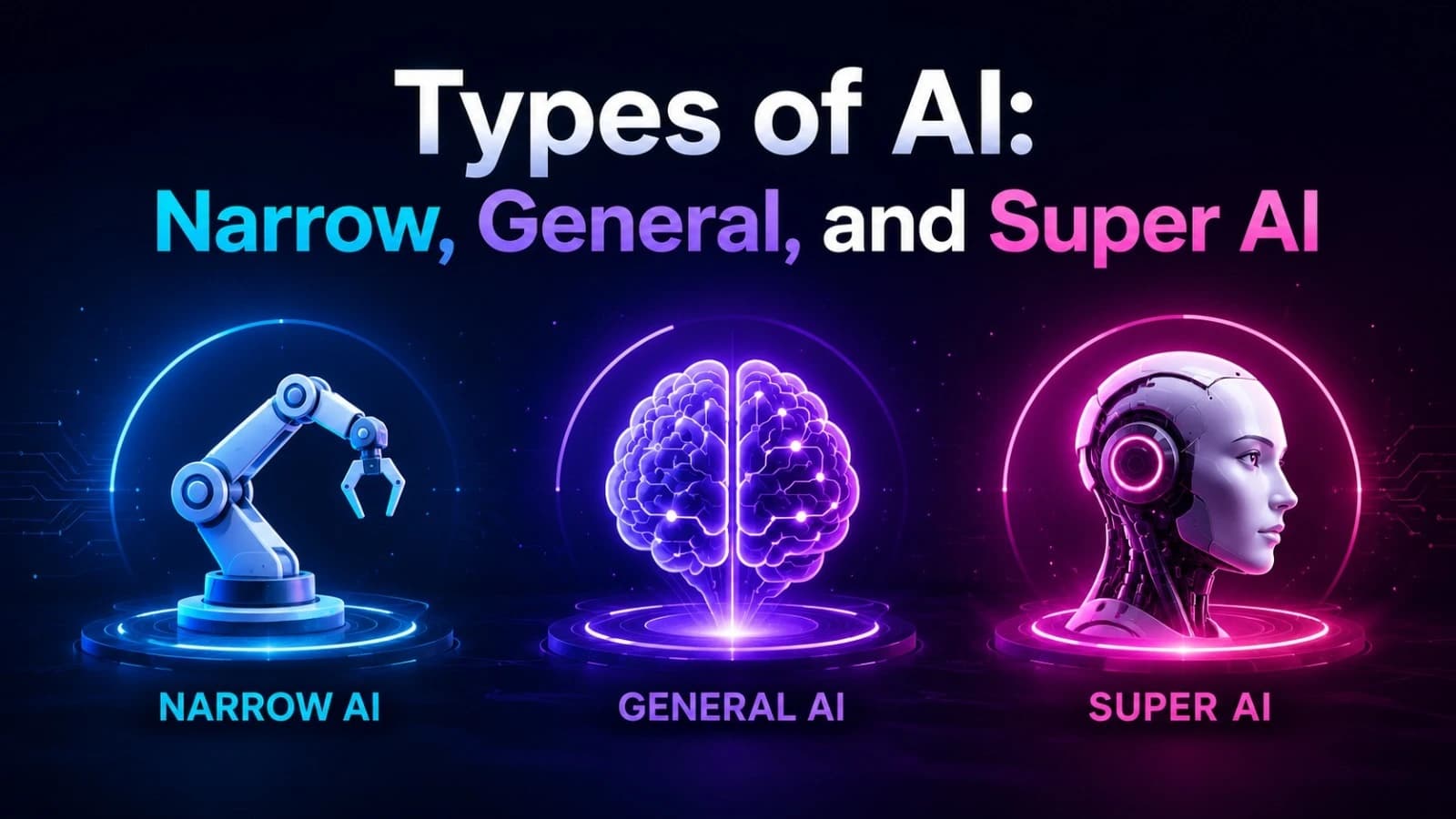
Types of AI: Narrow, General, and Super AI
Artificial intelligence is divided into three types: Narrow AI, which performs specific tasks; General AI, which aims to achieve human-level intelligence; and Super AI, a theoretical form that would surpass human intelligence.