IPv4 vs IPv6 What's the Difference?
IPv6 is the newer, safer version of IPv4 with way more internet addresses for all our devices.
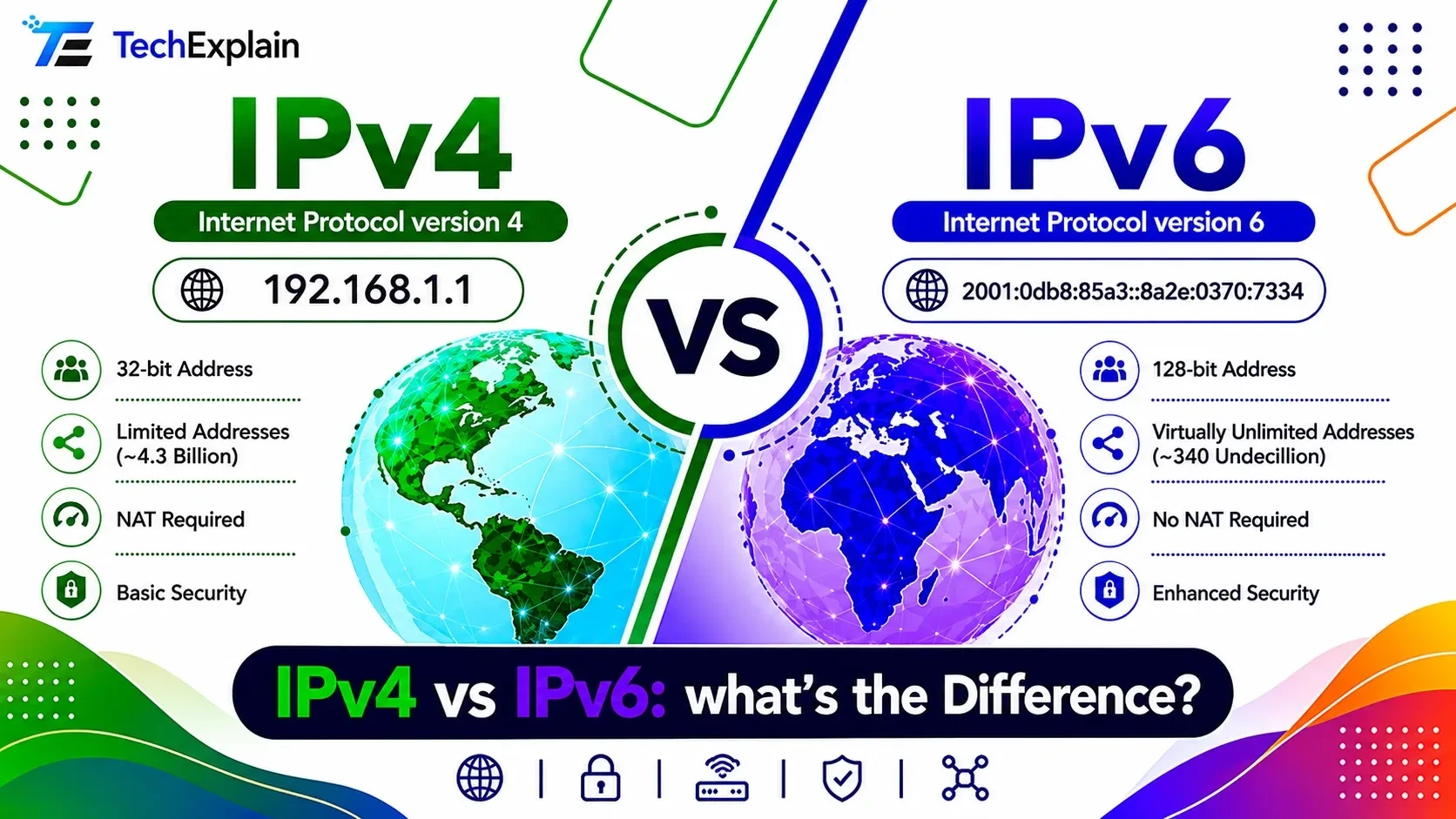
IPv4 and IPv6 are protocols that give a unique number to each device on a network. The main difference is that IPv4 uses 32-bit numbers for about 4.3 billion addresses, while IPv6 uses 128-bit numbers for a nearly endless supply of addresses
If one uses the internet, the computer used will have an address. It is called an IP address, and it is the means by which computers find each other on the network. Currently, there are two types of IP addresses: IPv4 and IPv6. IPv4 is the older system, first used in the early 1980s, and it still is what much of the internet is based on. IPv6 is the newer system and was developed to overcome one major problem, namely the shortage of IPv4 addresses. Simply put, IPv4 and IPv6 are two different versions of the same system – a series of rules which give every internet-connected computer its unique “home address”. The difference is in how many addresses can be provided by each version and in how much faster, safer and future-proof each version is. This article explains what IPv4 and IPv6 are, how they differ from each other and why the transition to IPv6 is necessary.
What Is IPv4?
The Internet Protocol Version 4 (IPv4) was released in 1983 and is still the most common way through which computers connect to the Internet. The IPv4 address takes the form 192.168.1.1 and consists of four sets of numbers separated by dots, where each number ranges between 0 and 255.
Since IPv4 uses 32-bit addressing, it allows for about 4.3 billion addresses. In the days when IPv4 was developed, it was never envisaged that this would not be enough. No one ever imagined that there would come a day when millions of devices – mobile phones, computers, smart TVs, watches, even fridges – would need their own address. The fact is that all available IPv4 addresses have been exhausted, which is why ISPs have had to come up with solutions like sharing an address between multiple devices.
What Is IPv6?
IPv6, or Internet Protocol Version 6, is a creation of the Internet Engineering Task Force (IETF), developed in the 1990s to resolve the problem of the lack of IPv4 addresses over the long term. IPv6 address structure differs significantly from that of an IPv4 address. It contains eight hexadecimal digit blocks, separated by colons. The addressing system uses a 128-bit address range, whereas IPv4 uses only a 32-bit range. With just one change in the number of bits used for addresses, there is a dramatic expansion in the number of available addresses: more than 340 undecillion (a 340 followed by 36 zeros) addresses can be created. Considering such a huge number of possible addresses, exhaustion of IPv6 addresses is not expected in the foreseeable future.
IPv4 vs IPv6: Key Differences at a Glance
Below is the table that describes the differences between the two IP addresses: IPv4 and IPv6.
Feature | IPv4 | IPv6 |
Address format | 32-bit (e.g., 192.168.1.1) | 128-bit (e.g., 2001:0db8::1) |
Total addresses | About 4.3 billion | About 340 undecillion |
Address type | Numeric, dot-separated | Alphanumeric, colon-separated |
Configuration | Manual or DHCP | Auto-configuration built in |
Security | Optional (IPSec added separately) | Built-in IPSec support |
Header size | Simpler but includes checksum | Larger but more efficient (no checksum) |
Broadcasting | Uses broadcast | Uses multicast and anycast instead |
NAT (Network Address Translation) | Commonly required | Not required |
Packet fragmentation | Handled by routers and sender | Handled only by the sender |
Speed and routing | Slower due to translation layers | Faster, more direct routing |
Adoption (2026) | Still widely used, declining share | Growing rapidly, now over 50% globally |
Why the Number of Addresses Matters
The first and most evident difference between IPv4 and IPv6 is related to the number of addresses; however, it is not just an example of a technological aspect because it determines the future development of the Internet. Each smartphone, speaker, camera, and car needs an individual address to connect. As IPv4 has limited the number of addresses to approximately 4.3 billion, service providers have been forced to use the technology known as Network Address Translation (NAT).
IPv6 addresses this limitation quite well. As recent statistics show, already almost half of internet traffic on the planet uses IPv6, with the predictions being made that IPv6 is likely to become dominant in comparison to IPv4 by the beginning of 2026. In particular, as of late March 2026, more than 50 percent of the visitors to Google have used IPv6 connections, which has happened for the first time in eighteen years during which Google keeps track of this statistic.
Security Differences
Another area where IPv6 holds an evident edge is that of security. The reason why security was not considered in the design of IPv4 initially is that the Internet at that time was made up of a few trusted organizations, and there was no concern for security in such a scenario. Over time, however, security became an addition to IPv4 through IPSec.
The case is quite different with IPv6 because it has been developed with IPSec embedded into it from the outset. Encryption and authentication can, therefore, be enabled as part of the process of establishing the connection. However, even though this does not guarantee that IPv6 will be safe from any attack, it ensures that the security measures in place are more solid.
Speed and Performance
It often raises questions if IPv6 is really faster than IPv4. The answer to this is affirmative in most cases, although there are other explanations as to why IPv6 is fast rather than speed. There is no need for NAT in IPv6, thus eliminating the extra process that could have been involved in every connection. The header processing for IPv6 is also less complicated since it does not include any checksum calculations.
Moreover, the IPv6 standard has improved its ability to route traffic through a system where broadcasts can be avoided. The way IPv4 broadcasts are done is to send traffic to all machines on the network; however, IPv6 uses multicast and anycast, whereby it sends traffic to the required machines only. This results in reduced congestion and faster website load times through real-life tests.
Configuration and Ease of Use
The IPv4 address can either be assigned manually or automatically using a process called DHCP (Dynamic Host Configuration Protocol). This method works well, but it needs constant monitoring, particularly in cases where there is a large network of devices that run into several thousands. IPv6, on the other hand, has been designed with automatic configuration at its core. There is a possibility for each device to configure itself and connect to the network easily.
Why This Matters for Website Owners
As a website owner, the transition from IPv4 to IPv6 is something that you should watch out for due to several practical considerations:
To begin with, the search engines and ISPs are becoming more IPv6-aware. With more users connecting using IPv6, sites that accept connections only on IPv4 will start facing slight disadvantages when it comes to the connection speed of those visitors, as they have to go through translation services.
Second, being able to support IPv4 and IPv6, which is called the "dual-stack" solution, means that all users can access your website regardless of what protocol they use for their connection. Most of the contemporary web hosts and CDN services already have a dual-stack system in place as default; hence, it's a good idea to ask your provider about IPv6 support.
Thirdly, as IoT devices, mobile networking, and intelligent infrastructure increase, more IPv6 will be adopted. Worldwide IPv6 traffic has risen from about 30% in January 2020 to about halfway to date, and this trend is expected to rise further. It is prudent to prepare your system now rather than having to do it in a rush at some future point.
Common Misconceptions About IPv4 and IPv6
Some misconceptions often come around this particular topic, and it is important to dispel them. The first myth is that IPv6 applies to big technology firms and ISPs but is of no use for common webmasters. However, the truth is that dual-stack connectivity is commonly supported by contemporary hosting services, which means that you might already be using IPv6 without even knowing it.
The next fallacy relates to IPv6 being insecure due to it being a new technology and therefore not yet thoroughly tested. On the contrary, the actual fact is that IPv6 has existed and been operational for over twenty years, and its inherent security makes it more secure than IPv4.
Lastly, others believe that using IPv6 will imply stopping to use IPv4. In the following paragraphs, it will be seen that this belief is wrong, as the two versions can exist together for a long period of time.
Will IPv4 Disappear Completely?
Not in the near future. IPv4 and IPv6 will likely continue to coexist for many years to come. As both IP addresses are not compatible with one another, a dual-stack implementation or translator is needed in order for both IP version addresses to be able to communicate. Older hardware, old business models, and regions where updates are slower than other regions would probably continue to use IPv4 long after IPv6 takes over.
Frequently Asked Questions
1. What is the main difference between IPv4 and IPv6? The difference lies in the size and number of addresses. IPv4 consists of a 32-bit addressing scheme, which can have up to 4.3 billion addresses, whereas IPv6 consists of a 128-bit addressing scheme and can have 340 undecillion addresses, which include security and easy configuration.
2. Why is the world moving from IPv4 to IPv6?The number of internet-enabled devices exceeds what the creators of IPv4 ever expected, resulting in the depletion of IPv4 addresses. IPv6 is the solution to the shortage of IPv4 addresses that will solve the problem for good.
3. Is IPv6 faster than IPv4?IPv6 is more efficient compared to being "faster." This protocol eliminates NAT, has a simplified packet header, and does not use broadcasting. All these factors make IPv6 faster and more efficient because of the reduced congestion in the networks.
4. Can IPv4 and IPv6 work together?Yes. The vast majority of modern-day networks operate under a "dual-stack" architecture where devices are able to utilize both the IPv4 protocol as well as the IPv6 protocol simultaneously.
5. Is IPv6 more secure than IPv4?The IP version 6 architecture was created to include the use of IPSec, which includes encryption and authentication services, right from its foundation, but IPv4 has the support of IPSec services only as an addition.
6. Do I need to switch my website to IPv6? Not necessarily immediately, but it would be advisable to contact your web host company. The activation of dual-stack service will allow your website to load quickly and be available both for IPv4 and IPv6 users, considering that more than half of the world's internet usage consists of IPv6 traffic.
7. Will IPv4 ever be completely replaced? No, not any time soon. It is projected that the two will continue to work alongside each other for quite some time, particularly where old equipment and outdated systems are used.
8. How do I know if I'm using IPv4 or IPv6? You can test this by going to sites such as Google’s IPv6 Statistics or even “What is my IP” sites that tell you if you have an IPv4 address (192.168.1.1), or an IPv6 address (2001:0db8::1).
Conclusion
IP version 4 and IP version 6 perform the same basic function: providing a device with an address that allows for communication with other devices through the Internet. However, the actual differences are found in terms of size, security, and efficiency. IPv4 did very well in serving the needs of the Internet for several decades, but eventually, its smaller address capacity required the introduction of something better. This is where IPv6 comes into play with many advantages over IPv4.
As the world moves towards IPv6 and has already reached the halfway mark of all traffic on the Internet, the distinction between IPv4 and IPv6 has become an imperative need for everyone managing a website, a corporate network, or even wants to know how the model of IPv6 works. In the coming years, IPv6 will replace IPv4.
Share this article
Related Articles
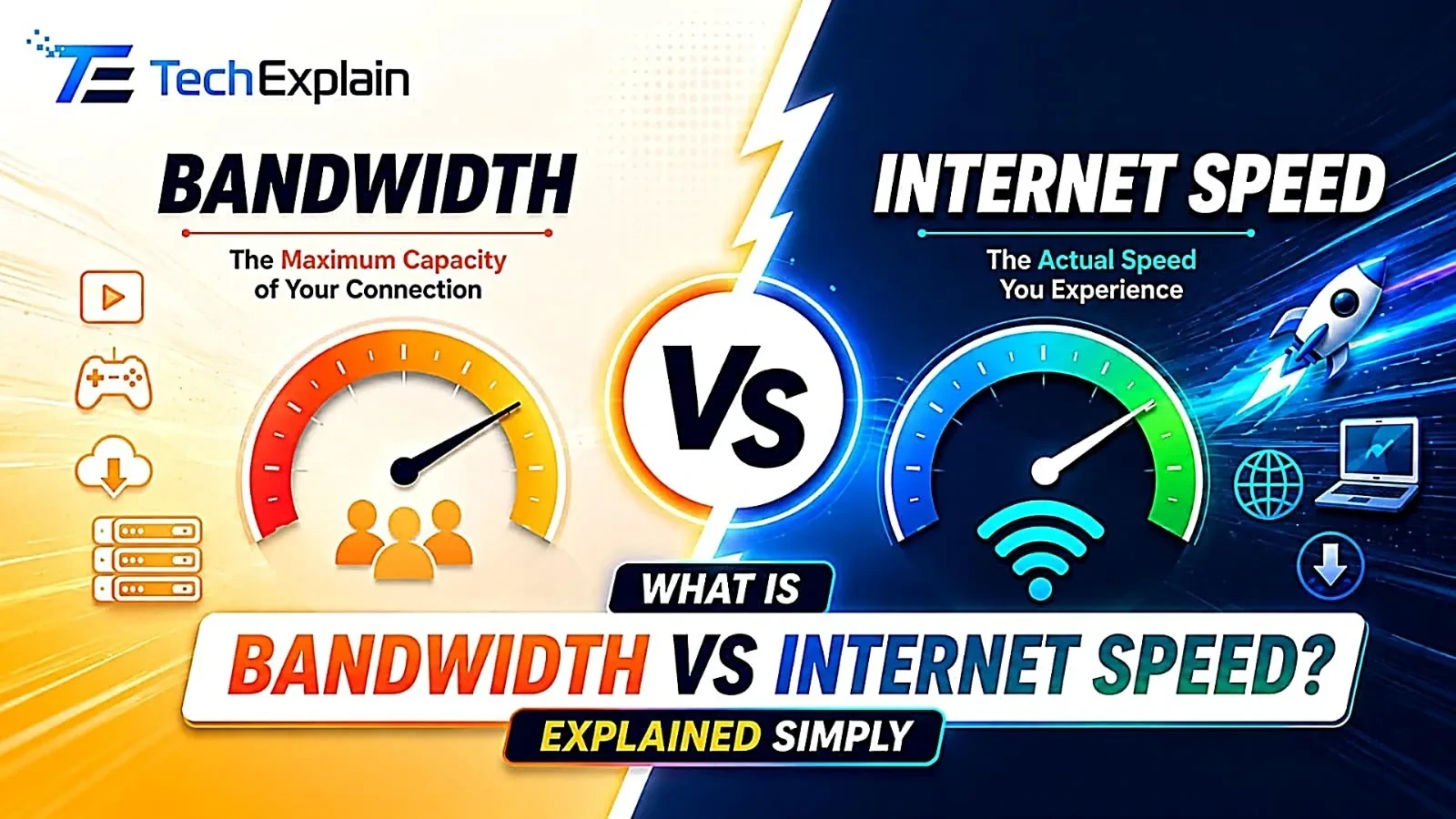
What Is Bandwidth vs Internet Speed? Explained Simply
Bandwidth is how much data your connection can carry, while speed is how fast that data actually moves.
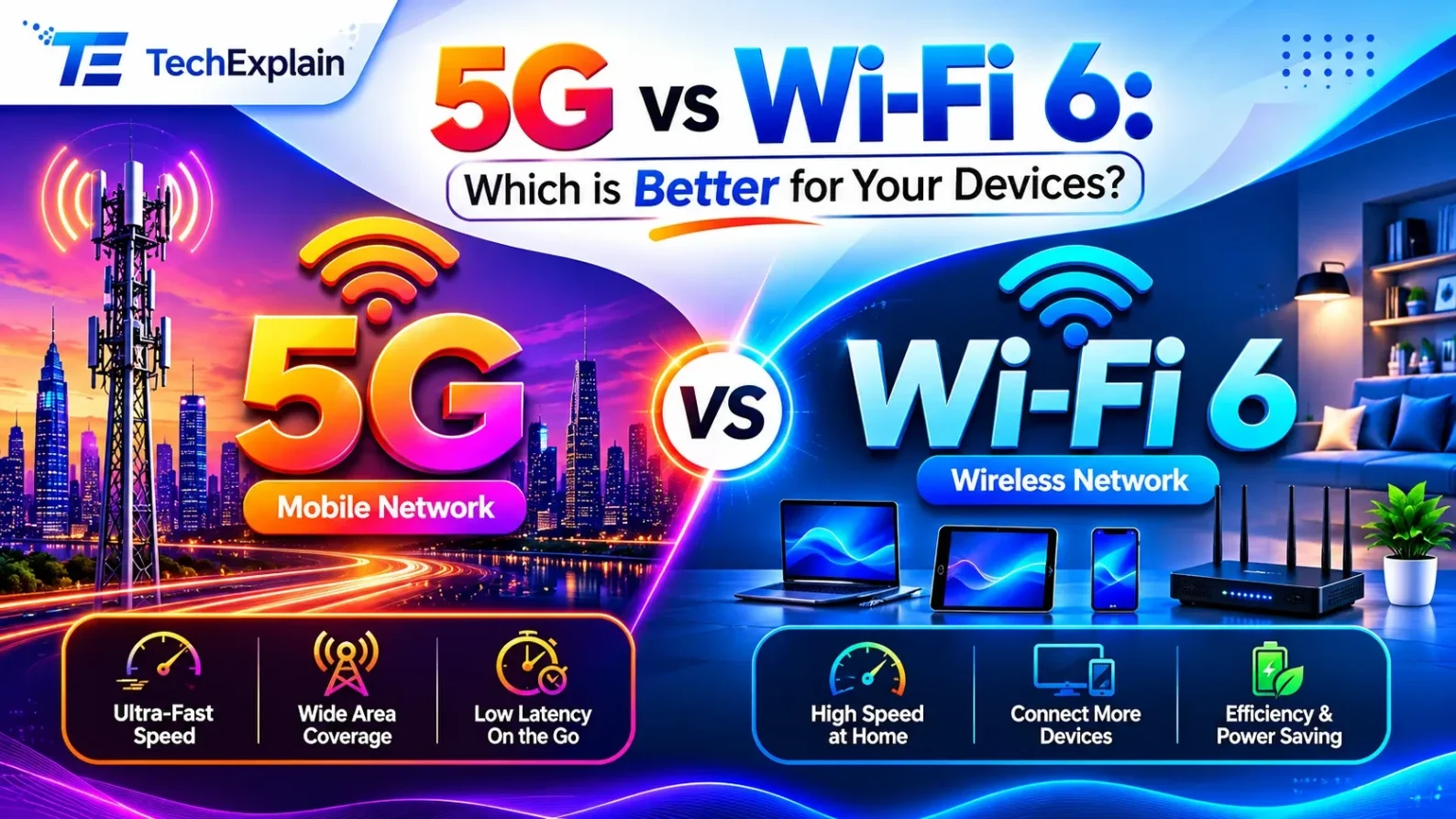
5G vs Wi-Fi 6: Which Is Better for Your Devices?
5G is fast internet for outdoors and travel. Wi-Fi 6 is fast internet for home and office. Using both together works best.
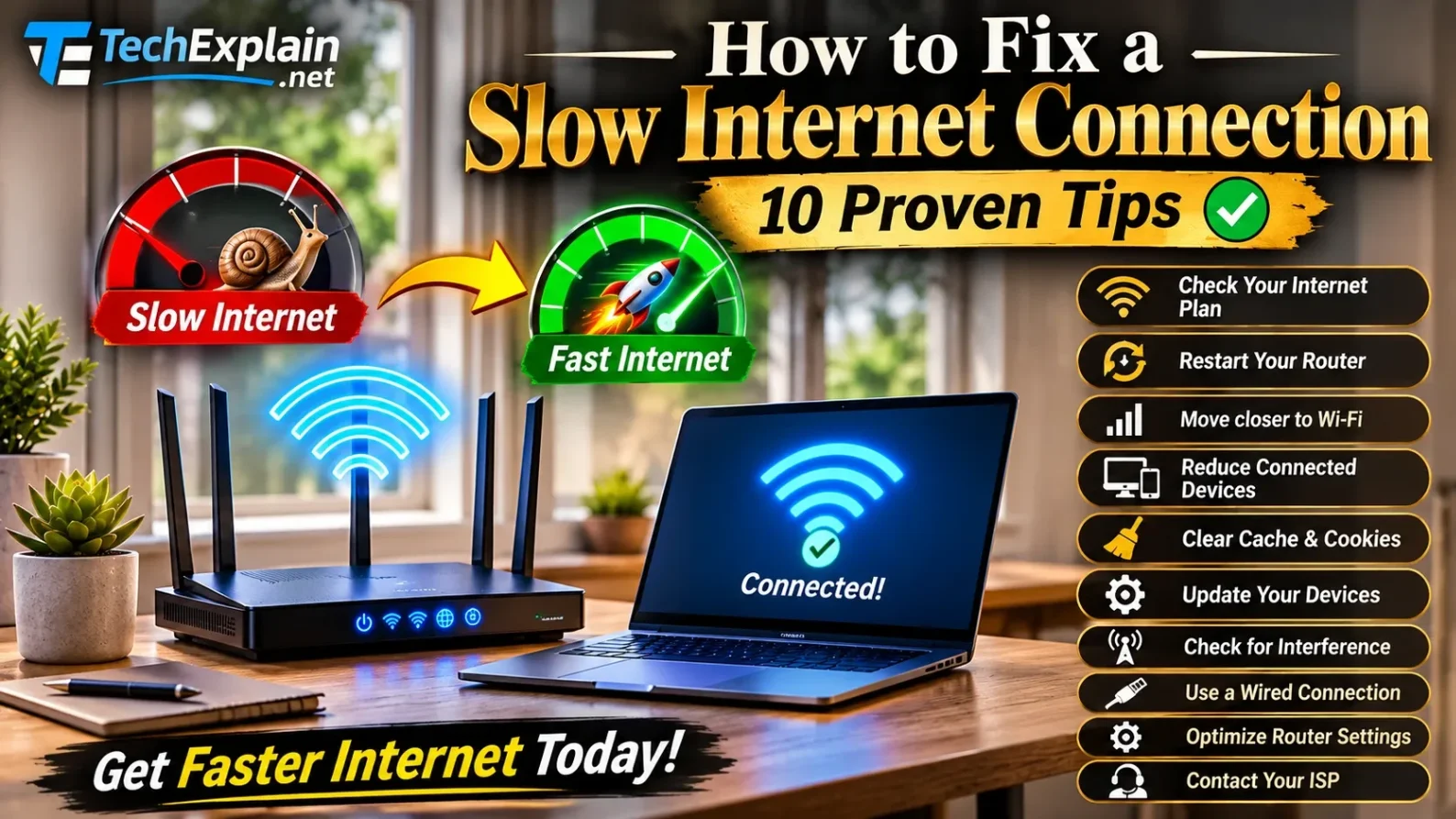
How to Fix a Slow Internet Connection: 10 Proven Tips
This guide shares 10 simple, tested tips to find out why your internet is slow and fix it fast.