
Online Games vs Offline Games: Pros and Cons
This guide explains online and offline games in easy words, so you can choose the right one for you or your kids.
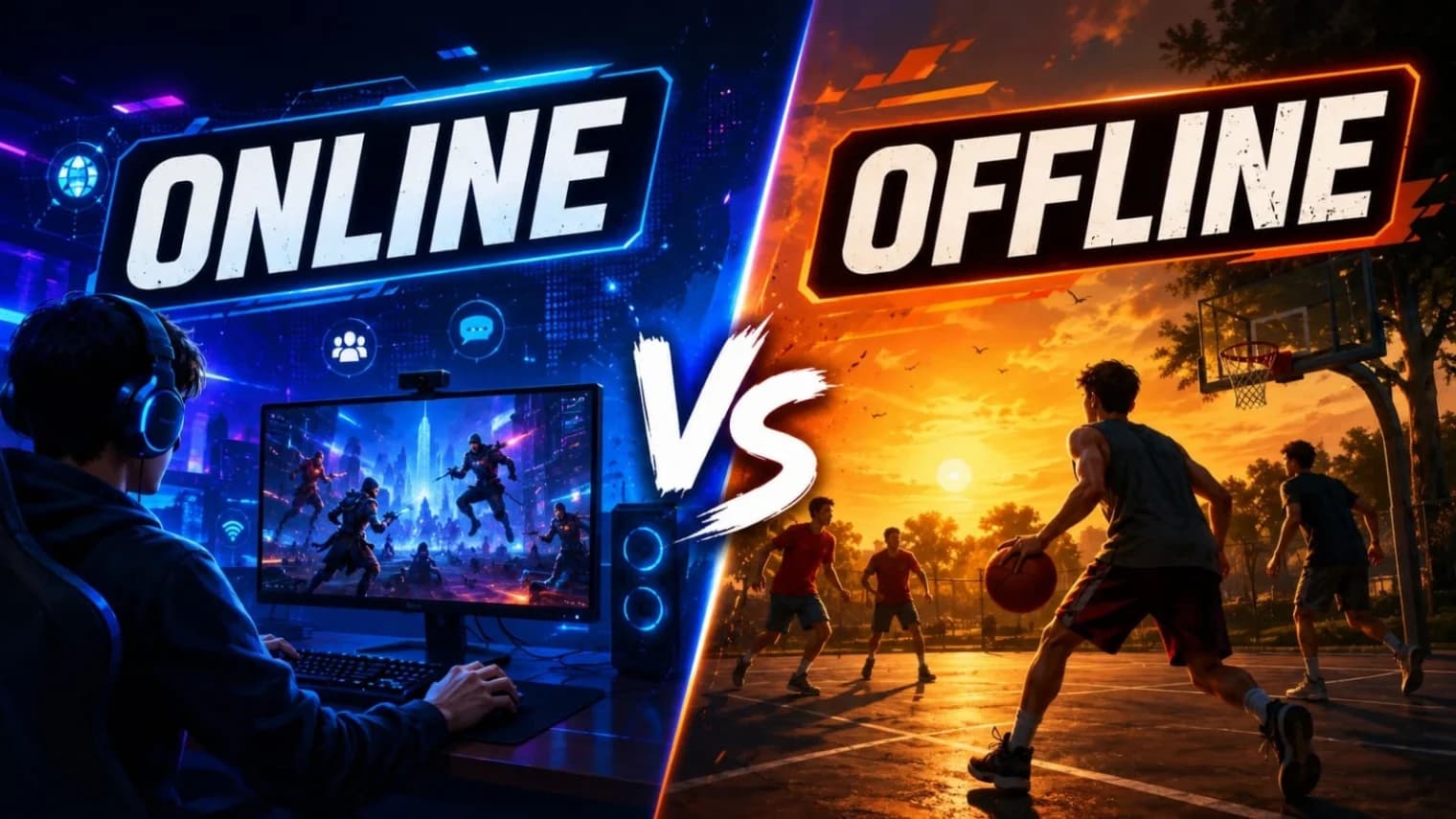
Online games connect you to the internet to play with others. Offline games run locally on your device without the internet. Online games offer global multiplayer and constant updates, but need fast internet. Offline games are reliable and private, but lack live social features.
Tens of millions of gamers take out their controllers, click their smartphones, or launch their PCs on a daily basis without even taking a moment to consider something as basic as: Is this online or offline gaming? On the surface, this might seem like a trivial difference, but it actually has a lot of implications on everything from how much you have to pay for gaming to how secure your personal information is. The following article will describe the differences between the two types of gaming in terms of technical details and how it suits different people better, be it parents, cost-sensitive gamers, travelers, or gamers looking for future-proof games.
Defining the Two Categories
Online games depend on having an active connection with either the server or other players located at some distance. Remove the internet access, and the game will not open or run in an incomplete version without all the necessary components. In contrast, offline games exist entirely within the machine you have. Installed, they require nothing more from your internet access, as all the files required for the gameplay are already saved in your memory. An easy way to understand the distinction is to think about an online game as a communication process between your machine and the server, and offline games as your machine speaking to itself.
The Technology Behind Each Type
As you play a game on the internet, your computer sends out numerous small packages containing information such as your location within the game, which keys were pushed, and any chat messages. Due to the fact that this is done constantly, the speed of your internet connection determines whether you can play smoothly or have lagging gameplay. The offline games are totally different in this aspect because everything needed is loaded from the local disk space – there is no need for a server at all.
All games, irrespective of their nature, go through the same set of generic phases in order to reach the player. For the offline game, execution happens entirely on the device, whereas in the case of an online game, execution takes place partially on the device and partially on the server. However, there is no difference in how the game is rendered and the interface of the game works.
Online Games vs. Offline Games: The Key Differences
Aspect | Online Games | Offline Games |
Internet requirement | Constant connection needed | None, after installation |
Social interaction | Real-time with other players worldwide | Limited to local multiplayer, if any |
Cost over time | Often includes subscriptions or microtransactions | Usually, a one-time purchase |
Content updates | Frequent, live updates and new content | Static, unless manually patched |
Data and safety risks | Exposure to strangers, scams, and data tracking | Minimal, since no data leaves the device |
Performance dependency | Affected by connection speed and server load | Depends only on device hardware |
Longevity | Can be shut down if servers close | Playable indefinitely, hardware permitting |
Comparing the Two Side by Side
While playing online games, there is always a need for an internet connection, unlike in the case of offline games, where there is no internet requirement except when installing the game for the first time. With regards to interaction, it is easy to play online games in real-time against players from anywhere in the world, but offline games have to be played locally or may lack the multiplayer function. As far as cost is concerned, the online game requires monthly subscriptions, battle passes, and other transactions but offline games require a one-time payment only.
Privacy and security issues run along the same lines, as games played online may be subject to data collection, encounters with strangers and scams, whereas offline games present zero security. Performance is influenced by different elements as well, while online games' performance will depend on the speed of your connection and the load of the server you are connected to, the performance of offline games is constrained only by the capabilities of the device you use to play them. Lastly, availability plays in favor of offline games once an online game becomes unavailable due to the company's decision to shut down the servers, the offline game will remain available until there are devices able to support its execution.
Advantages and Drawbacks of Online Games

There are indeed some tangible advantages to being an online gamer. Furthermore, there are additional options available for developers who wish to prolong a player’s enjoyment of the game without having to create a whole new game; for example, the introduction of new maps, new characters, new seasons, and temporary events. Most online games offer their community of players right from the start. Moreover, the option of cross-platform play makes it possible for gamers of different platforms to play on the same team.
But all of these strengths do have their cons. Poor connectivity or a high ping can bring an end to a gaming session right away because of the complete dependence of online games on your connectivity. While the original cost may seem cheap enough, the subscriptions, cosmetics, and downloadable content that follow will continue to cost more than what was expected. Gaming with people that are not familiar to you can lead to being harassed, scammed, or even having to deal with cheats, and in case the servers of the publisher are ever shut down, the game will no longer be playable by any means.
Advantages and Drawbacks of Offline Games

The following are some benefits that are only applicable to offline games. The games do not require access to the Internet or server once installed; therefore, the players do not depend on connectivity at all times for playing the game. The game is still playable even if the developer discontinues support for the game or closes his company. Since there is no contact with any server or player online, there is no chance of hacking, cheating, or harassment.
The disadvantages associated with this choice, however, are mainly social and creative in nature. Multiplayer, if available at all, will typically consist only of people who are playing together in the same room, while the content will remain static after the game has been completed unless there is an expansion pack released by the company that develops the game. Offline games do not capture the essence of the vibrant world the same way that online games do.
A Typical Week Blending Both Worlds
The majority of gamers transition between both types of games without realizing this on a daily basis. On a regular weeknight, for example, the gamer may be involved in a fast-paced online battle royale, fighting off other gamers across the world in real-time, whereas during flights or commute times, the gamer is involved in playing offline games whenever there is no internet connection. On quiet weekends, the gamer may spend time exploring offline games with an engaging storyline that requires no Internet connection whatsoever, while family game nights usually take place around the console, which involves offline gameplay within the same room.
Why This Distinction Actually Matters
It is beneficial for parents to know the games where children will be exposed to strangers, where their data will be collected, and where there may be costs incurred through the app. People traveling or having poor internet access can choose games that will not let them down mid-game sessions. For those who want to have the game for as long as possible, it is important to know that online games can disappear at any minute when their servers are shut down.
Hybrid Games: The Best of Both Worlds
The modern gaming world does not demand that one stick to a particular lane. More and more games are coming into the market with an offline and an online game bundled together in one package. It is like having a story in single-player mode that can be played and completed within a flight, coupled with a multiplayer mode that can be activated when the internet connection comes back online. Such games provide a safe cushion for developers in case the server shuts down because they have something that will ensure the gameplay continues regardless of whether there is access to the server or not. Hybrid games tend to be more practical and less risky to play; however, such games usually require a bigger file download, and sometimes some of the tasks must be performed in the presence of an internet connection, even in offline mode.
How to Choose the Right Type for You
The decision about whether to play online games or their offline versions depends on a few simple questions. The first thing to consider is your internet connection; if you experience many outages, low speed, or even data limitations, offline games do not involve this factor at all. Second, what is your budget and timeframe, as the initial cost of a product is higher than that of a free-to-play online game, yet subscriptions and microtransactions can be extremely pricey during a year. Third, do you need multiplayer features, or would you prefer to play solo, as the main point of online games is their community, while offline games are made for focus and control. Fourth, how important is the availability of the product, as offline games guarantee you access to it for ten years, regardless of any decisions of a company. Finally, who will be playing the game? If this is your kid, the offline version is preferable due to its safety and absence of any privacy problems caused by interaction with strangers. Thus, there is no universal correct answer – everything depends on priorities.
Frequently Asked Questions
Does a single-player game mean that it is an offline game?
Not necessarily, because there are numerous single-player games that still need to be connected to the internet in order to get activated and record their achievements.
Is it possible to play a game online without the internet?
Yes, but only a few of them provide the offline version, which is, however, less feature-filled than their online counterpart.
Are all online games expensive when compared to their offline counterparts?
Not necessarily from the outset, although they definitely include additional expenses like subscriptions and downloadable content much more often.
Which is safer for kids?
It’s much safer to play offline games, which don’t require contact with unknown people and the collection of any personal information. If kids play online, it would be better to check their privacy settings first.
Do offline games require updates?
Yes, but only occasionally, when there is some kind of bug, and not as frequently as online games. What’s more, updates for offline games do not necessarily need Internet access.
Final Thoughts
There is no inherent superiority between online gaming and offline gaming because the best one to play is based on personal preference and what each gamer wants out of the game. Online games provide socialization, new content, and global competition; however, they require continuous payment, connectivity to work, and some sacrifice of privacy. Offline games have the benefits of dependability, a one-time payment, and an absolute lack of connectivity requirements, which means sacrificing the social aspect and fresh content.
Share this article
Related Articles

Esports: A Complete Guide to Competitive Gaming
Esports is competitive video gaming where players and teams battle for money, fame, and recognition, much like traditional sports.
Best Free-to-Play PC Games in 2026
A simple guide to the best free PC games in 2026.
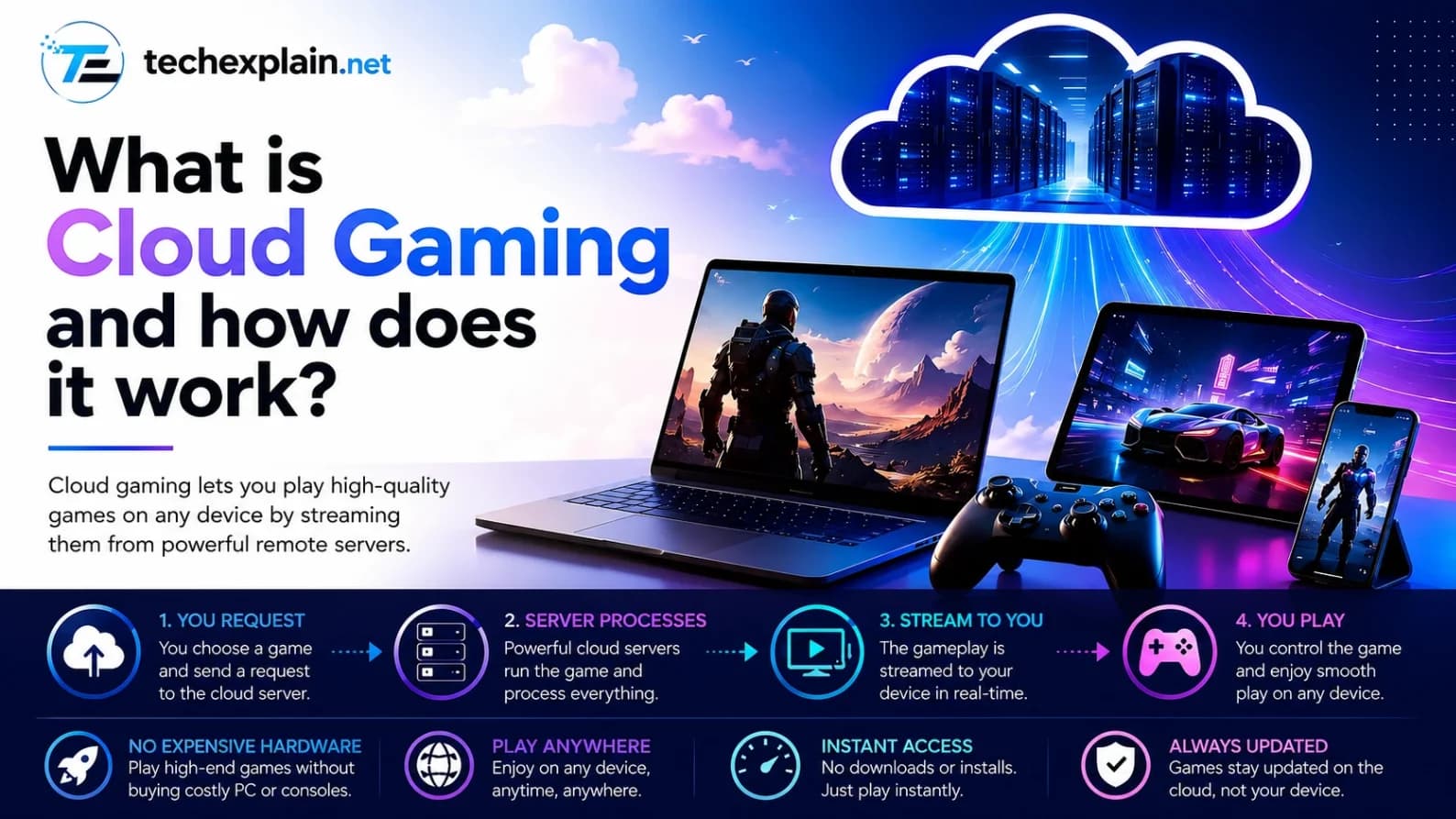
What Is Cloud Gaming and How Does It Work?
Cloud gaming lets you play games streamed from powerful remote servers, so you don't need expensive gaming hardware.