
What Is Gaming? A Complete Guide to How Video Games Have Evolved
Gaming has come a long way, from old arcade machines to today's consoles, mobile games, and online competitive gaming.
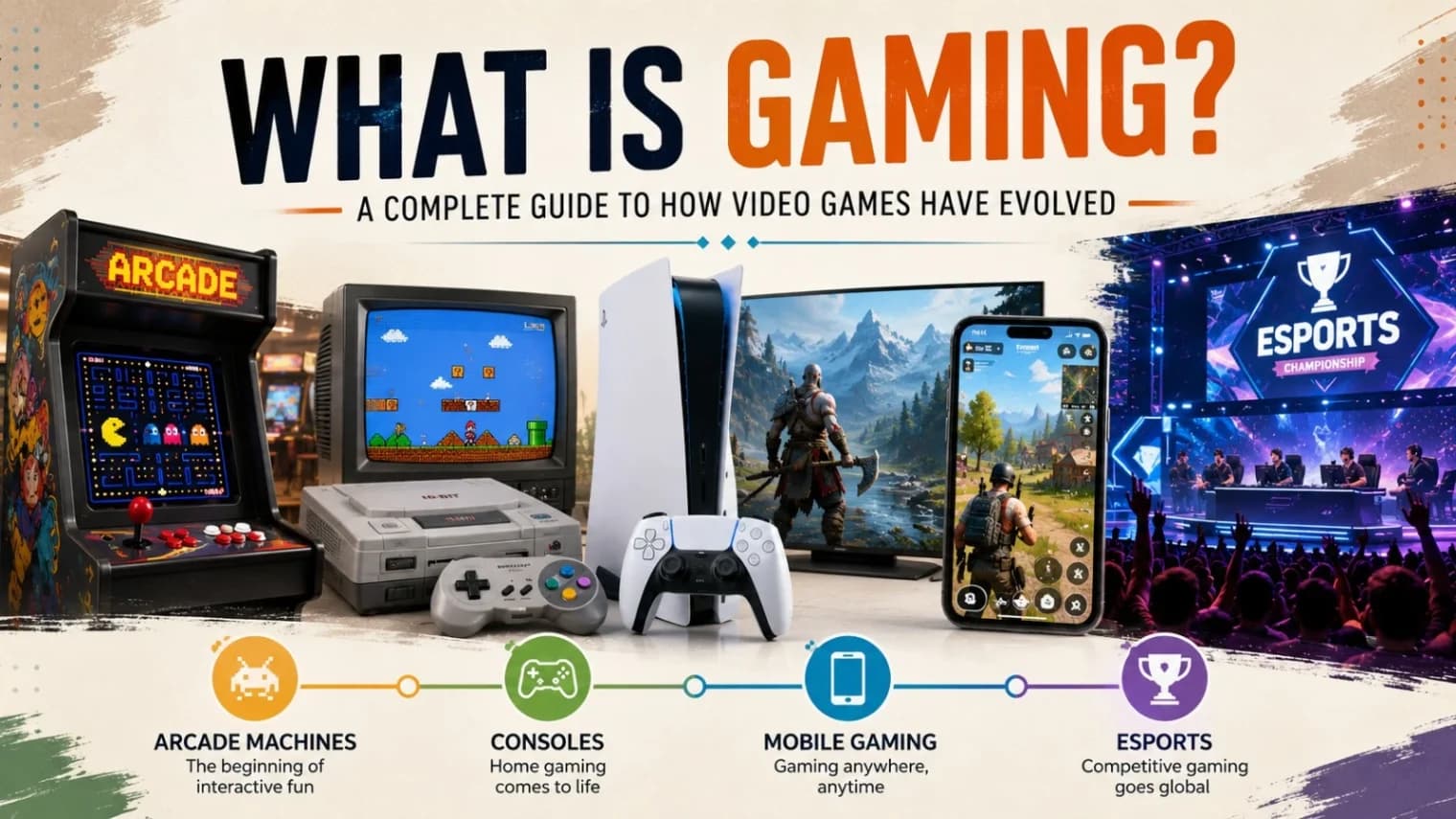
Gaming refers to the act of playing electronic, digital, or physical games. In the modern context, it primarily means video gaming,an interactive entertainment medium where players use controllers, keyboards, or touchscreens to interact with visual displays and achieve specific goals
The figures of those playing games regularly on their phones while having a coffee break, on consoles while coming back home after work, and PCs even while sleeping in bed, runs into billions; however, not many people have stopped for a moment and tried figuring out the real meaning behind the word "gaming". The history of gaming itself has gone through various stages, from just a couple of coin operated machines to one of the most significant industries in the world of entertainment. This industry is larger than both the film industry and the music industry combined.
Defining Gaming
Gaming refers to the playing of interactive computerized games using electronic equipment such as consoles, PCs, mobile phones, tablets, or arcade machines. Interactivity is the main characteristic of gaming as the result of the game depends on the actions, timing, and proficiency of the person playing rather than proceeding in an automated manner. One can look at it in this way that while a movie narrates a story to the viewers, in a game the player takes the pen in his hand and writes the story.
How a Video Game Actually Works

In essence, video games can be defined as a compilation of rules, programming code, and artwork that interacts in response to anything done by the user and gives a feedback on the same through a monitor, loudspeakers, or vibrating controllers. The tangible machine, whether it may be a console, PC, or mobile phone, provides the computing capabilities, but the actual game remains intangible until it runs: a jump, a solved puzzle part, rising scores. There exist three basic steps in which most games run each time a user plays the game. These steps include game engine and logic – that is the programming code used by programmers to determine the physics, rules, and behavior of characters, input capture – that is when hardware monitors the actions of users in a controller, keyboard, mouse, or touchscreen, and output and feedback – that is the visuals, sounds, and haptic feedback.
Gaming vs. Traditional Entertainment
Conventional entertainment such as movies, television programs, and novels employs a static form of entertainment whereby the spectator merely views the unfolding of events. The experience is the same each time and can be attained simply using a screen. In contrast, gaming is an interactive and participant-defined process involving console gaming, computer gaming, mobile gaming, and e-sports whereby the gamer decides the action and the experience varies with each gamer and playing instance. It calls for not only adequate hardware but also participation. Hardware and software complement each other as partners. There is no way any gaming system irrespective of how sophisticated can be of any benefit without software to execute its operation and vice versa.
A Timeline of Gaming's Evolution
The history of gaming is generally divided into five major eras, with each era distinguished by its technological characteristics.
1. Arcades and First Consoles (1970s–1980s)
This was the era where gaming was brought to the masses through the means of arcade machines and the first home systems. Games such as Pong, Space Invaders, and Pac-Man lured people into playing these arcade games and laid the foundations of the culture of gaming. The first home gaming machines included the likes of the Atari 2600 and the Magnavox Odyssey, which provided basic video games that could be played inside one's own house. Systems based on 8-bit technology such as the NES and the Sega Master System improved the graphics quality and also introduced characters such as Mario, which even now are household names.
2. 16-bit Systems and the Dawn of 3D (Late 1980s–1990s)
The improvement of the hardware led to better visualization, improved story-telling, and the first attempt at 3D worlds. Such hardware as 16-bit consoles including Super Nintendo (SNES) and Sega Genesis provided better graphics and improved game design. The personal computer revolution began due to DOS and Windows games like Doom and Warcraft. The first attempts of using 3D graphics were made with consoles like the original PlayStation and Nintendo 64, when games like Super Mario 64 appeared with full 3D worlds.
3. Getting Online in High Definition (2000s)
This era saw the emergence of internet access on a permanent basis as well as HD graphics. Online gaming took on new dimensions with the arrival of gaming networks such as Xbox Live and PlayStation Network which enabled gamers to connect to other players across the world. HD gaming consoles, including the Xbox 360 and PlayStation 3, rendered cinematic quality games.
4. Mobile and Social Gaming (2010s)
The smartphone made it possible for gaming to be available to anyone via their pockets, even to those who have never owned a gaming console. The success of mobile games such as Angry Birds, Candy Crush Saga, and Clash of Clans meant that hundreds of millions of people became casual gamers. Games such as FarmVille brought about the concept of freemium games with the help of in-app purchases rather than paying money upfront.
5. Streaming, Esports, and Cloud Gaming (2020s–Present)
In today’s era of gaming, there is much less emphasis on the device used for gaming itself and far more on ecosystems where playing, competing, and watching all come together. Cloud gaming services like the Xbox Cloud Gaming or the NVIDIA GeForce Now provide high-quality gaming experiences on devices without the hardware capabilities to run them. Esports, which encompasses competitive games like League of Legends or Valorant, are filled with people watching from the stadium and online.
The 3D Revolution (1990s–2000s)

With the development of technology, video games transitioned from being in two dimensions to being three dimensional. Consoles such as the PlayStation, the Nintendo 64 and the Xbox allowed for better graphics, improved storytelling and bigger game worlds. This time frame also marked the emergence of online video games as internet connection became commonplace.
What a Day of Gaming Actually Looks Like
Gaming in the modern world is so ingrained in people’s daily activities that they hardly even notice how frequently they engage in it. They may start their day with playing some puzzle mobile game while preparing themselves for work. On their way to work, they can watch highlights from some streamers. During the evening, an hour can be spent on playing a console game with a plot, then the same person may watch his or her friends compete in some ranked matches. During the night, cloud-based gaming on a tablet becomes possible, as there is no need for a computer for gaming anymore.
Why This Evolution Matters
Knowledge about these different epochs is not just an end in itself for gaming enthusiasts; it is something very useful indeed which can be put to good use. It helps businesses and developers decide on how best to market their product whether through the premium console route or the free-to-play mobile games model. Gaming enthusiasts planning a change of career or just studying can apply knowledge about the future of the gaming industry to areas like designing games, creating engines, or esports management.
Frequently Asked Questions
Is gaming the same thing as esports?
Esports is the competitive side of the gaming world. Each esports game is necessarily a game, but most games have no relation at all to competitiveness or audiences.
What's the real difference between console and PC gaming?
The PlayStation and Xbox game consoles have been made for the sole purpose of playing games, whereas PC’s are multipurpose devices but also good at playing games. The kind of games played on both are identical, but the cost and manner of control differs.
Can a game exist without any hardware?
False. All games require some sort of platform on which to be played. The cloud gaming system is still powered by physical hardware; the user is simply unaware of that fact.
What are gaming's main historical eras?
Arcade and early console games
The 16-bit / early 3D games
Online and HD era
Mobile and social games
Current streaming and Esports games
Conclusion
Gaming has come a long way over the years. What started as basic screens and simple controls has turned into rich, lifelike experiences that pull players in. New tools like VR, AI, and cloud gaming are changing what's possible, and the coming years look even more exciting and open to everyone. Gaming isn't just about fun anymore, it's touching culture, education, and the way people connect with each other, becoming a real part of everyday life.
Share this article
Related Articles
Esports: A Complete Guide to Competitive Gaming
Esports is competitive video gaming where players and teams battle for money, fame, and recognition, much like traditional sports.
Best Free-to-Play PC Games in 2026
A simple guide to the best free PC games in 2026.
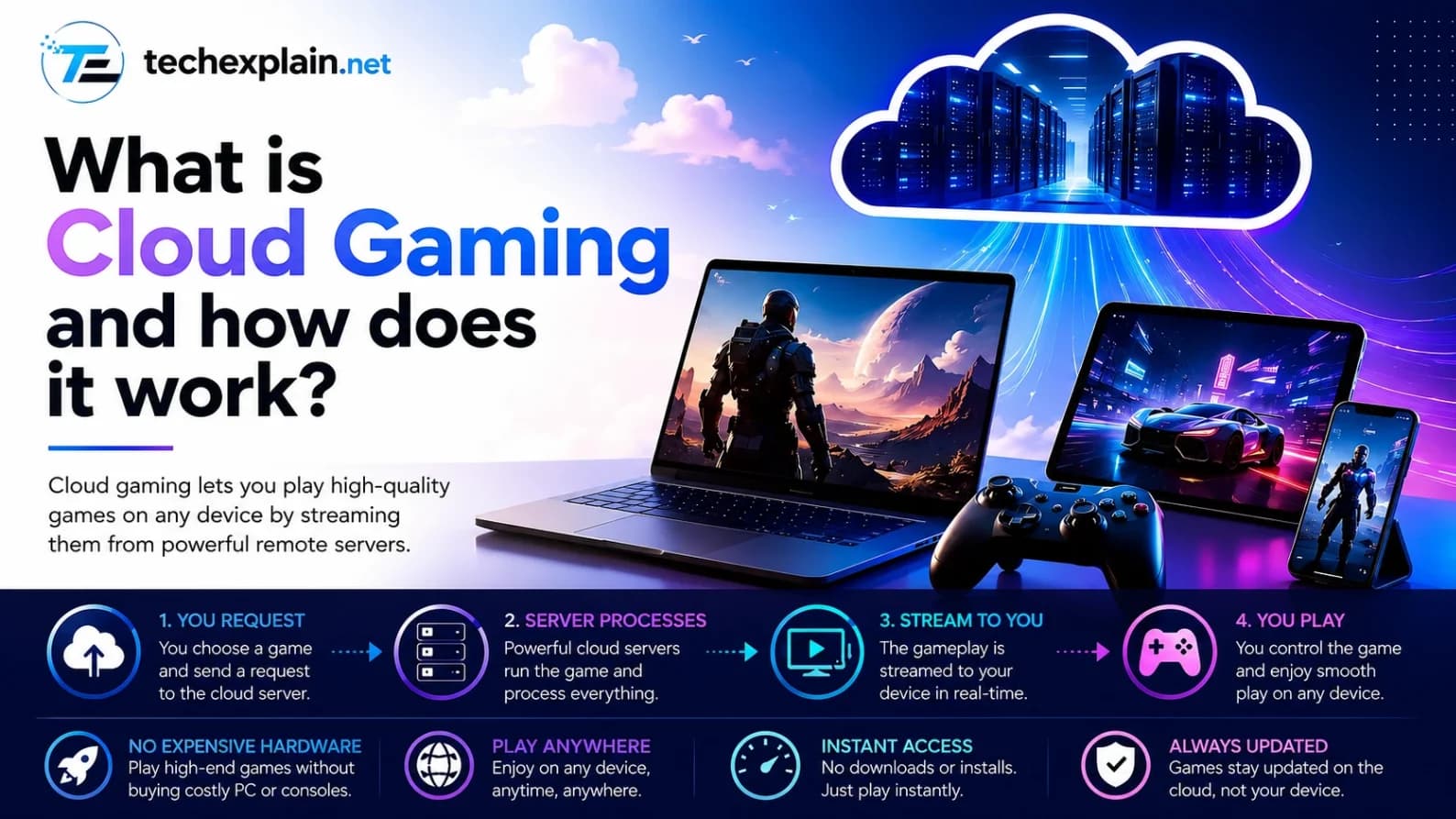
What Is Cloud Gaming and How Does It Work?
Cloud gaming lets you play games streamed from powerful remote servers, so you don't need expensive gaming hardware.