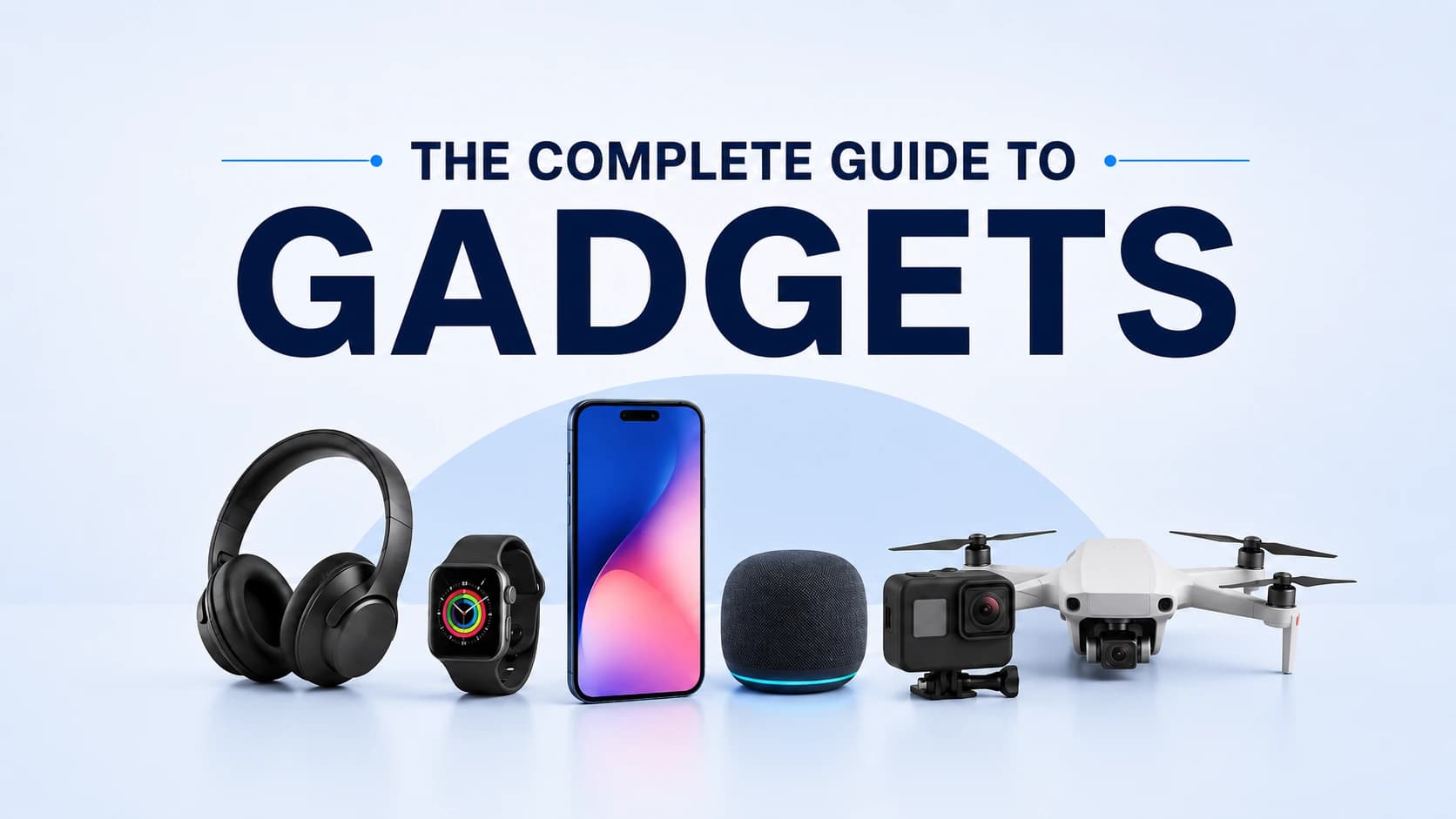
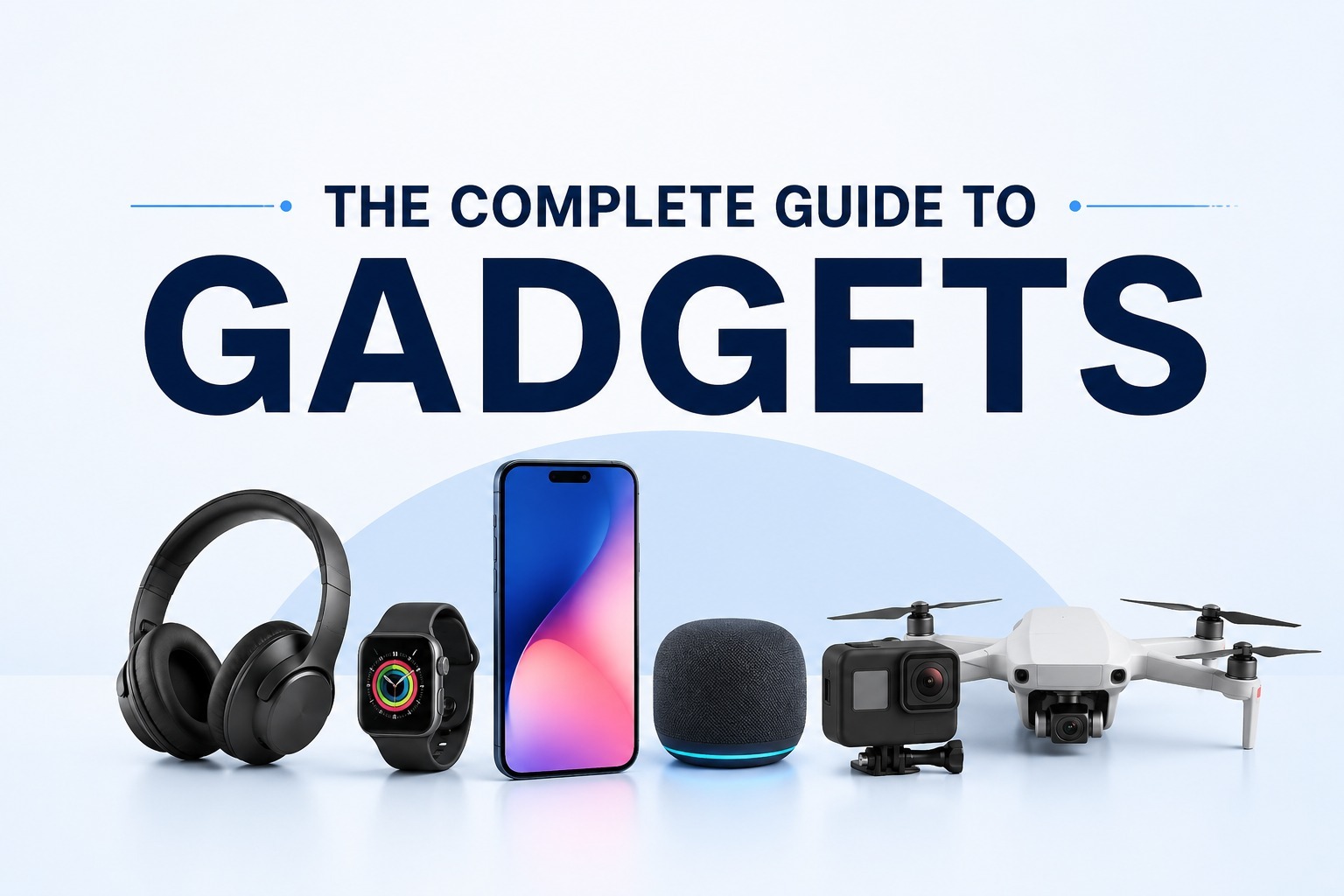
The Complete Guide to Gadgets: Types, How They Work, and What's Coming Next
Gadgets are compact electronic devices — like smartphones, smartwatches, and smart speakers — built to simplify daily tasks through smart features rather than just physical hardware. They work through a simple cycle: receiving input (touch, voice, buttons), processing it via built-in sensors and software, executing an action, and delivering output. The post organizes gadgets into seven categories: communication, entertainment, smart home, health/fitness, educational, office/productivity, and wearables, giving real examples for each. It also shows how gadgets quietly shape a typical day, from morning alarms and fitness tracking to evening entertainment and nighttime home security. Responsible use is emphasized too — managing screen time, protecting personal data, and keeping devices updated. Looking ahead, the post highlights major trends: AI-driven personalization, advanced health monitoring, fully automated smart homes, eco-friendly designs, foldable/flexible devices, expanding AR/VR use, and stronger biometric security — pointing toward gadgets becoming even smarter and more essential to everyday life.
Introduction
Technology touches nearly every part of a normal day, and gadgets are the reason why. A phone that wakes you up, a watch that tracks your sleep, a speaker that answers your questions, a laptop that runs your workday — these small devices have quietly become the infrastructure of modern living. This guide breaks down what actually qualifies as a "gadget," how these devices function under the hood, the main categories worth knowing, and where the industry is headed over the next several years. Along the way, you'll find practical tips for using gadgets in a way that boosts productivity instead of eating into your time and attention.
What Exactly Is a Gadget?
A gadget is a compact, purpose-built electronic device engineered to make a specific task faster, easier, or more convenient. The word covers everything from a pair of wireless earbuds to a fitness band to a full-featured smartphone.
The key distinction between a "gadget" and generic "hardware" is intent and intelligence. Hardware simply refers to physical components — a hard drive, a circuit board, a battery. A gadget, by contrast, is built around a specific function that improves someone's daily routine, and it typically pairs that hardware with software, sensors, or connectivity to deliver on that function. A smartwatch isn't valuable because of its casing — it's valuable because it reads your heart rate, buzzes when you get a message, and syncs with an app on your phone.
How Gadgets Actually Work
Most gadgets, regardless of category, operate on a similar four-stage cycle:
Input — The device receives a command, whether that's a screen tap, a voice request, a button press, or a motion detected by a sensor.
Processing — An onboard chip and its software interpret that input, often cross-referencing data from sensors or an internet connection.
Execution — The gadget carries out the requested action, whether that means opening an app, adjusting a thermostat, or logging a heart-rate reading.
Output — The result is delivered back to the user through a screen, sound, vibration, or notification.
This loop happens in fractions of a second, and it's the reason gadgets feel responsive rather than mechanical. Behind the scenes, most modern gadgets rely on a mix of microprocessors, embedded sensors (accelerometers, GPS chips, heart-rate monitors, microphones), and either Wi-Fi, Bluetooth, or cellular connectivity to talk to other devices or the cloud.
Snapshot: Core Characteristics of Modern Gadgets
Attribute | What It Means |
Form factor | Small, portable, and typically designed to be carried or worn |
Core goal | Reduce friction in a specific everyday task |
Underlying tech | A combination of processors, sensors, and software |
Interaction method | Touchscreens, voice assistants, buttons, or companion apps |
Longevity | Extended through firmware/software updates rather than physical changes |
Dependencies | Power source and, in most cases, an internet or Bluetooth connection |
The Main Categories of Gadgets
1. Communication Devices
These keep people connected across distance — smartphones, tablets used for video calls, smartwatches with messaging support, and Bluetooth earbuds built for hands-free calls.
2. Entertainment Devices
Built for downtime — smart TVs, streaming boxes, gaming consoles, over-ear headphones, and portable Bluetooth speakers.
3. Smart Home Devices
Automate and secure the household — smart bulbs, learning thermostats, video doorbells, connected security cameras, and voice-activated hubs like Amazon Echo or Google Nest.
4. Health and Fitness Trackers
Turn personal wellness into measurable data — fitness bands, smartwatches with ECG or SpO2 sensors, connected scales, and sleep trackers.
5. Learning Tools
Support students and educators — tablets loaded with learning apps, e-readers, smart pens that digitize handwriting, and graphing calculators.
6. Productivity and Office Devices
Speed up professional work — laptops, ergonomic wireless mice, portable scanners, presentation clickers, and digital note-taking tablets.
7. Wearables
Wearable gadgets are devices designed to be worn on the body, providing continuous, real-time information. Common examples include smartwatches, fitness trackers, smart glasses, and biometric rings that monitor activity, health, and daily habits throughout the day.
A Day in the Life: Where Gadgets Show Up Without You Noticing
Morning: A phone alarm wakes you; a smartwatch reports how well you slept.
Commute: Earbuds handle a call or a podcast while GPS navigation reroutes around traffic.
Work/School: A laptop, webcam, and headset carry you through meetings or classes.
Evening: Entertainment devices like a streaming player or gaming console help you relax after a busy day, while intelligent lighting adjusts brightness and colors to create a calm, comfortable atmosphere.
Night: At bedtime, smart home security devices like connected cameras or smart locks help ensure the house is protected, while wearable devices seamlessly track sleep patterns and vital signs to improve overall rest and well-being.
None of these interactions feels remarkable individually — which is exactly the point. Gadgets have become infrastructure rather than novelty.
Using Gadgets Without Letting Them Use You
Smart devices are tools, and like any tool, their value depends on how deliberately they're used.
Set boundaries on screen time. Use built-in screen-time trackers to catch habits before they become dependencies.
Prioritize function over novelty. Choose devices that solve a real problem rather than ones bought purely for trend appeal.
Keep security tight. Update firmware regularly, use unique passwords or a password manager, and only install apps from official stores.
Review data permissions. Many wearables and smart home devices collect sensitive data — check what's being shared and with whom.
Unplug intentionally. Building short gadget-free windows into the day (meals, the first hour after waking) helps preserve focus and real-world connection.
Where Gadget Technology Is Headed
AI-driven personalization. Devices are shifting from reactive tools to proactive ones — anticipating needs based on patterns rather than waiting for a command. Voice assistants are also getting better at picking up on tone and context, not just keywords.
Deeper health monitoring. Wearables are moving past step-counting toward early detection — blood-oxygen trends, stress markers, and continuous glucose monitoring are becoming realistic features rather than lab-only tools.
Fully automated smart homes. Lighting, climate, appliances, and security are increasingly designed to work together as one connected system rather than as isolated devices.
Sustainability as a design priority. Expect more devices built with recycled materials, solar or kinetic charging, and lower standby power draw as manufacturers respond to e-waste concerns.
Foldable and near-invisible form factors. Flexible displays and ultra-thin components are pushing gadgets toward shapes that were impractical even a few years ago — including tech embedded directly into fabric or eyewear.
Mainstream AR/VR. Augmented and virtual reality are expanding beyond gaming into remote training, virtual classrooms, and medical simulation.
Stronger on-device security. As gadgets store more personal data, expect wider adoption of biometric authentication — face, voice, and behavioral recognition — built directly into the hardware.
Frequently Asked Questions
What's the difference between a "device" and a "gadget"? All gadgets are devices, but not all devices are gadgets. "Device" is a broad term for any electronic hardware; "gadget" specifically implies something compact, feature-driven, and designed around convenience.
Do gadgets need internet access to work? Not always. Some function offline (a basic calculator watch, for instance), but most modern gadgets rely on Wi-Fi, Bluetooth, or cellular data for their smartest features, like syncing data or receiving updates.
How often should gadgets be replaced? This depends on the category. Software-driven devices (phones, watches) are often worth replacing every 2–4 years as manufacturers stop issuing updates. Simpler gadgets (speakers, basic trackers) can last much longer if the hardware stays functional.
Are cheaper gadgets worth buying over premium brands? It depends on the use case. Budget devices can offer solid core functionality, but premium options usually provide longer software support, better build quality, and stronger security — worth it for devices handling sensitive data like health or home security.
Final Thoughts
Gadgets have moved from being optional conveniences to being quietly essential parts of how people communicate, work, learn, and manage their health. Understanding the categories, knowing how these devices function, and using them with intention makes it far easier to benefit from what they offer — without becoming dependent on them. As AI, sustainability, and new form factors continue to reshape the space, the gadgets of the next decade are likely to feel less like separate tools and more like a seamless extension of daily life.
Share this article
Related Articles
What Is a Power Supply Unit (PSU) and How to Choose One
A PSU changes wall power into safe power for your computer, and this guide shows you how to choose the correct one and when you need a backup.

How to Choose the Right Graphics Card: A Simple Guide for Everyone
A simple guide to picking the right graphics card for your needs.
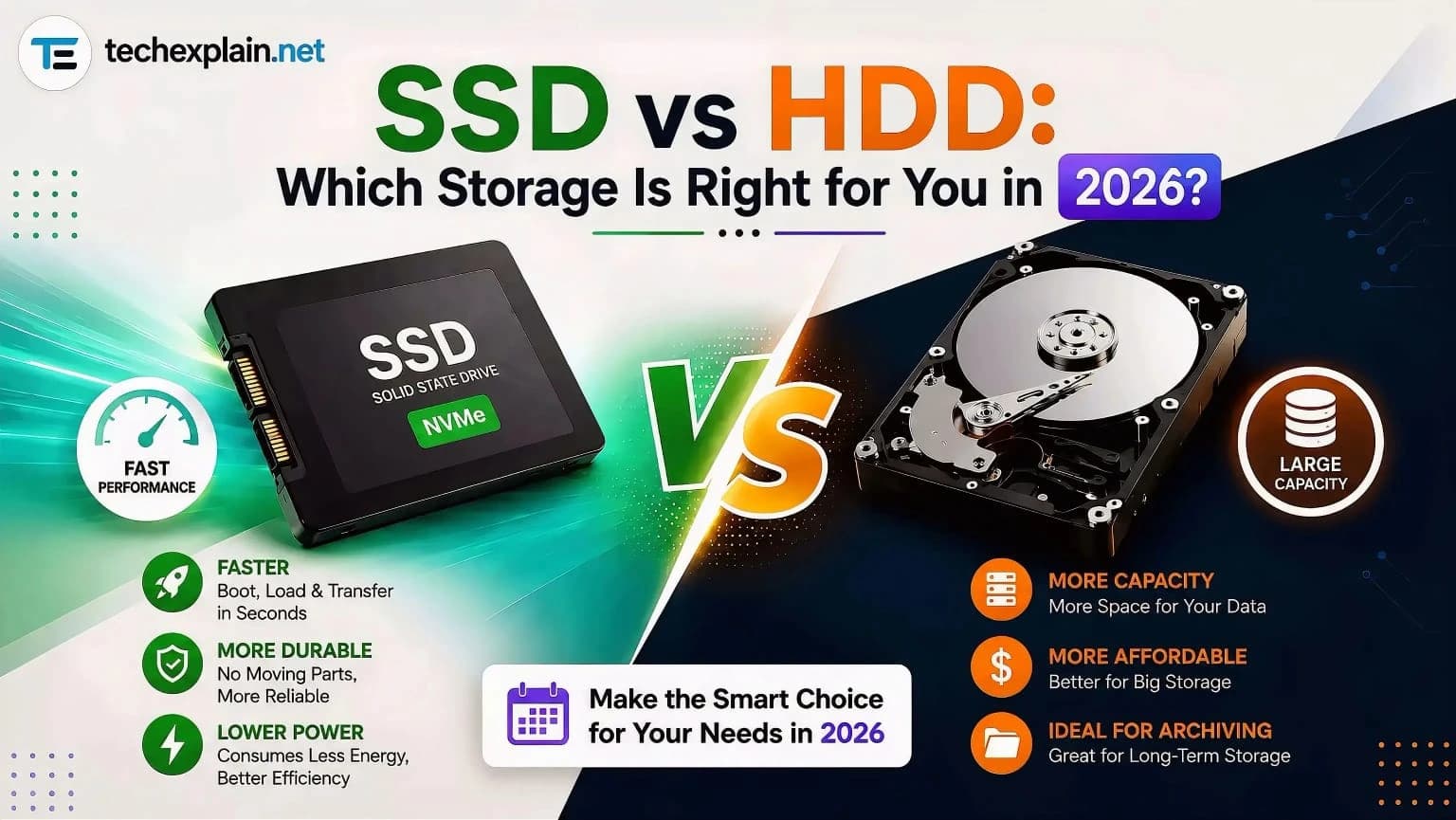
SSD vs HDD: Which Storage Is Right for You in 2026?
SSDs win on speed, HDDs win on price — pick based on what you actually need to store.