
VPN vs Proxy: Which One Is Better for Online Privacy?
A VPN encrypts all your device’s traffic and is best for privacy, while a proxy only changes your IP for one app and is best for quick, simple tasks.
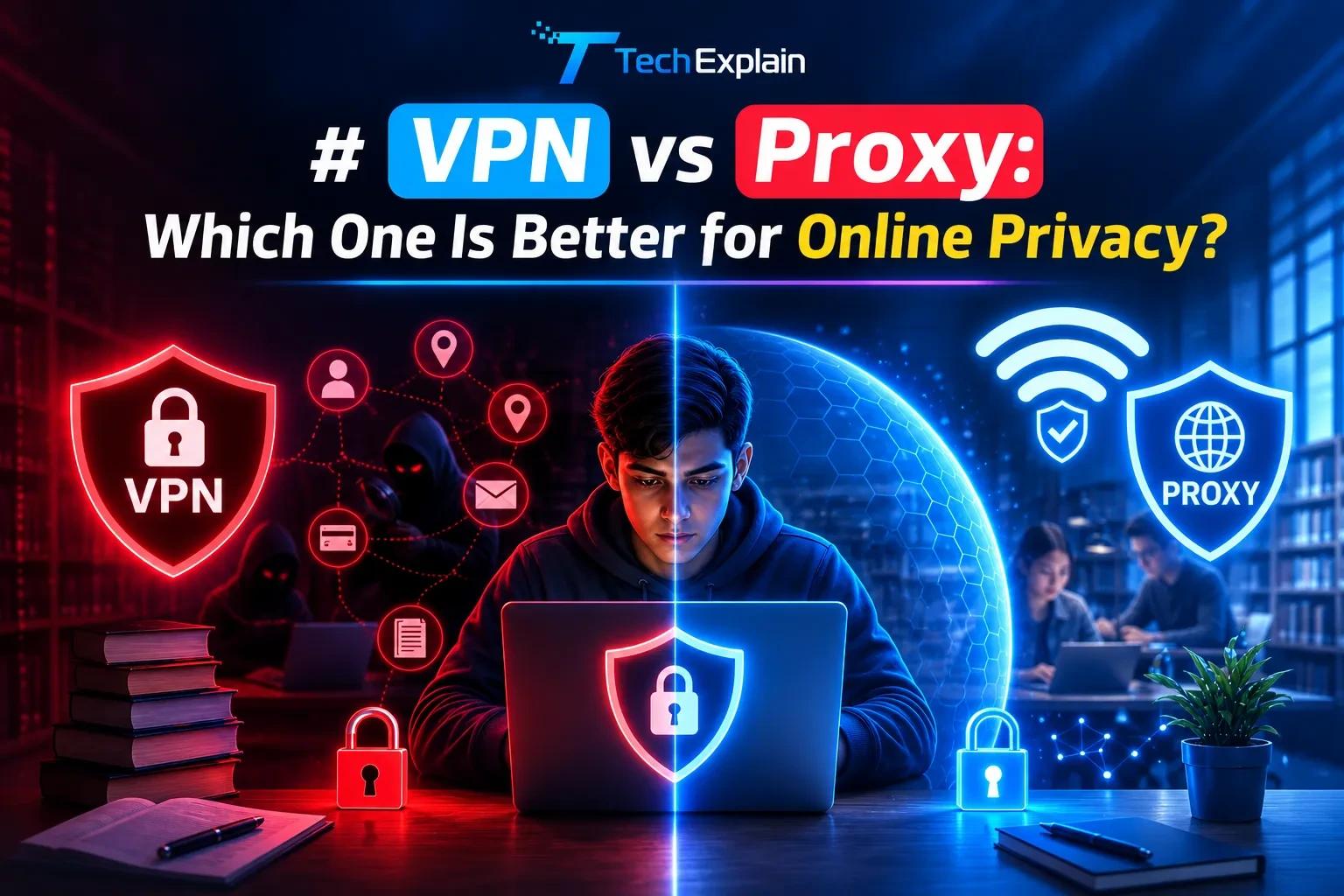
A VPN is better for online privacy because it encrypts your internet traffic and routes data across your entire device, whereas a proxy only masks your IP address—typically for a single app or browser without adding encryption.
A virtual private network should be chosen over a proxy server because it offers greater security and privacy and encrypts the user's traffic while protecting the entire computer. The proxy, on the other hand, is capable of changing the IP address but is limited to one app. If a choice between these two tools is to be made, it is best to opt for a VPN for Wi-Fi protection and data safety and for a proxy for faster browsing within one application.
It is common for people to confuse a proxy with a virtual private network. They do have similarities in changing the IP addresses seen by various websites, so that is why confusion can arise. These two tools, however, operate differently. They offer different types of security to users, which can result in exposing one's personal information to all who observe the network. This article presents the main differences between these two tools in plain language.
What Is a VPN?
The abbreviation VPN means Virtual Private Network. All information goes through this tunnel. As the data is encoded, it will be impossible to read it on the local network level, including the owner of the Wi-Fi spot in the café, hotel, or even your ISP.
Consumer-grade solutions are designed for your entire computer rather than certain applications only, allowing you to browse the Internet using all apps at once.
Moreover, most high-quality services provide you with several useful tools. The kill switch function disconnects your Internet if the connection is lost. You get protected from any leakage of information. DNS leak protection is important to make sure that all your website lookups go through the tunnel. Split tunneling allows sending part of your traffic through the encrypted tunnel, while the other part uses your usual Internet connection.
What Is a Proxy?
Your request goes through it and then back to you from it as well. Usually, proxies operate at the level of one application, thus affecting the connection of that particular browser or program. Other applications continue to work with your usual connection. It can come in handy when you want one application to appear to be in another location while the rest of them stay untouched. The key point here is that a proxy does not usually encrypt your traffic. It just transfers it, so anyone observing the network between your device and the proxy can see the unencrypted data you are sending and receiving.
There are several popular types of proxies: HTTP and HTTPS for working with web traffic and SOCKS for transferring various kinds of data.
VPN vs Proxy at a Glance
Feature | VPN | Proxy |
Encryption | Yes, traffic is encrypted | Usually no |
Coverage | Whole device in most cases | Often one app or browser |
Privacy level | Higher | Lower |
Public Wi-Fi safety | Strong protection | Weak protection |
Speed | Can be slightly slower | Often faster |
DNS protection | Commonly included | Usually not included |
Typical cost | About $3 to $15 per month | Free to about $50+ per month |
Best for | Privacy, travel, remote work | Scraping, testing, single-app IP change |
Main weakness | Needs a trusted provider | Does not protect data on the network |
Privacy: Which One Protects You More?
Privacy-wise, the use of a proxy is less effective than a VPN service. This is because a proxy helps to hide the IP address, while a VPN service hides the content of the traffic. For example, if you connect to a proxy service while using an open Wi-Fi network in an airport, the airport will see your traffic. When you use a virtual private network, the airport will see only your secure connection.
Another important feature here is the DNS lookup. Each time you write the website name, you ask the DNS server where this website is located, and these requests show what websites you visit. Most of the virtual private networks make all of these requests go through their secure tunnel, but the proxy will not care about DNS at all.
The user should remember that both services require trust because the provider knows something about you, and it depends on the policy of the service. In other words, choose the service with a clear privacy policy. It is worth noting that changing your IP address does not make you anonymous. You can be traced by your cookies, device ID, or fingerprints if you log into your account.
Security: Which One Is Safer?
VPN provides significantly more security, particularly in cases of networks where you have no control. In the case of public Wi-Fi, criminals can establish a fake network, or simply listen to the data flow through it. However, with a VPN service, your data becomes encrypted prior to being transmitted from your computer or mobile device; therefore, this method becomes useless in such cases.
Proxy services cannot provide this kind of protection. There is HTTPS, which solves the problem only partially, encrypting the connection only between an application and a web server. There are several additional advantages for a remote worker provided by the use of a VPN; these include a password check, stopping of traffic if there is any issue with a tunnel, and use of highly-tested protocols.
At the same time, a VPN service does not solve all problems. It does not protect against phishing, malware, and password stealing. It is responsible only for the protection of the way your data travels, not the source and its users.
Speed: Which One Is Faster?
Proxy wins over VPN when the factor of speed matters the most. It will not encrypt your traffic, hence putting less burden on its shoulders. In case just a single application requires an IP change, it appears light and speedy.
However, a VPN needs to encrypt your internet traffic and forward all your data to a remote server. It may cause a slight delay in your internet connection. Protocols like WireGuard are very quick, and proximity to the server is enough to handle video streaming, surfing, and voice calls. However, speed depends on the distance to the server, server overcrowding during peak hours, and activity type. Thus, the question is what amount of speed you are ready to sacrifice for the sake of safety.
Coverage: Whole Device or Single App?
You activate the VPN just once, and all applications receive protection. In contrast, a proxy works for the application where you enable it. However, this feature may not always be disadvantageous. When you need your browser to be located somewhere other than your device, and the rest of your applications to remain in the original location, then a proxy will help you easily do that.
When Should You Choose a VPN?
The best option is the usage of the Virtual Private Network if security is a priority rather than speed. In such cases, it will be perfect for hotel, airport, café, or event Wi-Fi that is unprotected. It will work well for working from home with confidential information or even traveling abroad with filtering networks. For regular web browsing, it will provide only one setting that works with all applications. If a data leak can cause significant damage, a proxy should not be used.
When Should You Choose a Proxy?
Using a proxy is useful when the objective is specific, and data isn't private. When one tool requires a different IP address, then the use of a proxy is usually the fastest solution. Proxies are often used in web scraping, site testing, and automation since multiple queries will likely require different addresses. The risk lies in using a proxy for security purposes. Since the application doesn't employ HTTPS, your information and browsing history can be exposed to the proxy service.
Common Myths and Limits
The most prominent misconception is that using a proxy or a VPN will make you anonymous. This is incorrect because logins, cookies, browser fingerprints, and other device IDs can give away your identity. The second myth that exists is that free services are the same as paid ones. Paid VPNs and proxies offer protection from being tracked, your data being sold to third parties, extra advertising, and slow speed of your connection. Maintaining servers requires spending money, and therefore, when there is no monetary cost, the price will be your data.
How to Choose and Stay Safe
Determine your needs first. If you require both encryption and complete device security, go with the option of a VPN service. On the other hand, if you only need an IP address change temporarily for some purpose, then a proxy might do the job. But when choosing a paid VPN, make sure you get all the essential features such as a kill switch, DNS leak prevention, proper logging policies, and compatibility with your cell phone and PC. Now you should adopt good practices. Make sure your software is always up to date, visit HTTPS sites, use strong passwords, and enable multi-factor authentication. Carry out a free leak test from time to time.
Conclusion
As far as online privacy is concerned, the virtual private network is a superior solution for most Internet users. It encrypts data, provides anonymity for all activity within local networks, and protects all apps on any gadget. As such, it is perfect for use on public Wi-Fi, when working from home, traveling, and surfing privately. The proxy server remains useful for rapidly changing an IP address, routing traffic for one app only, testing sites, and scraping data. However, never use it for handling any important information.
Frequently Asked Questions
What is the main difference between a VPN and a proxy?
The difference lies in encryption and coverage. In a proxy, only one application's traffic is proxied to an IP address of the server, whereas in a VPN, the traffic is encrypted and covers your entire device.
When should I choose a VPN over a proxy?
If you need maximum security and privacy, use a Virtual Private Network (VPN). Such places include free Wi-Fi spots, working from home, traveling, doing transactions at the bank, and other situations involving your personal information.
Can I use a proxy and a VPN together?
Sure, you can do that, but it tends to be much more complicated. Some users run the proxy from within one application while the other applications are shielded by the VPN. This way can be useful for some tests or routing purposes, but it slows down your Internet speed, so most users don’t require this option.
Are proxies or VPNs better for streaming and bypassing geo-restrictions?
They can both move your physical location, so either can do the job. A proxy tends to be faster and easier when only one program is involved. A virtual private network is more suited to keeping your location secret, along with securing your entire connection.
Do VPNs or proxies offer better protection against cyber threats?
While a VPN will protect you since it will encrypt your data even when using an unsecured network, neither of these will stop phishing, malware, or password theft. To truly protect yourself, use a VPN together with all these other things.
Share this article
Related Articles
Password Managers Explained: Are They Safe?
A password manager stores all your logins in one encrypted vault, so you only need to remember one strong master password.
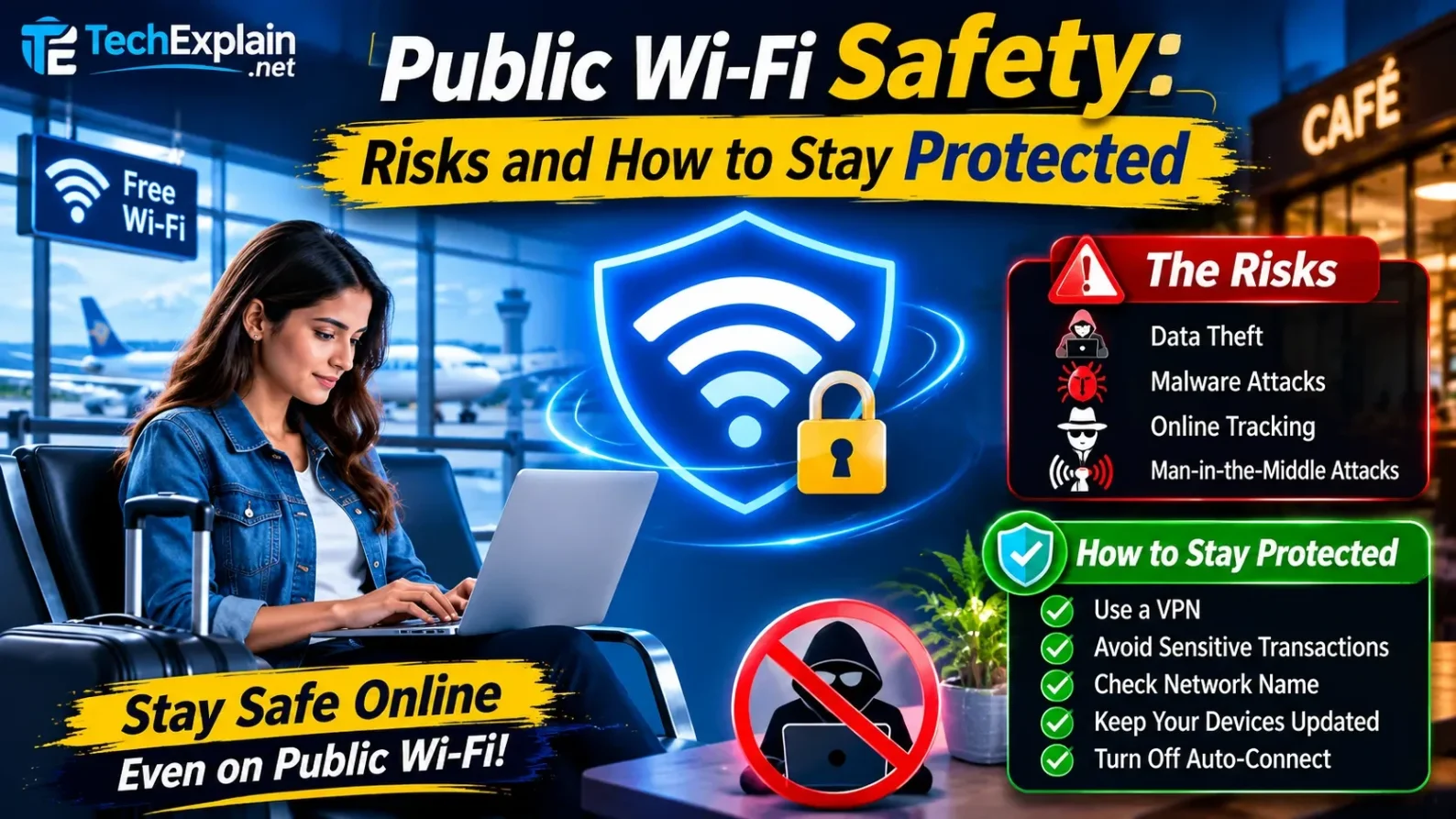
Public Wi-Fi Safety: Risks and How to Stay Protected
Free WiFi is risky because hackers can steal your data through weak security and fake hotspots, so use a VPN and avoid banking or work logins on public networks.
What Is Ransomware and How to Protect Yourself
Ransomware locks or steals your files and demands payment to restore them. This guide explains how it spreads and how to stay safe.