
What Are Backlinks and Why They Matter for SEO
Backlinks are links from other websites that boost your site's trust and ranking on Google.
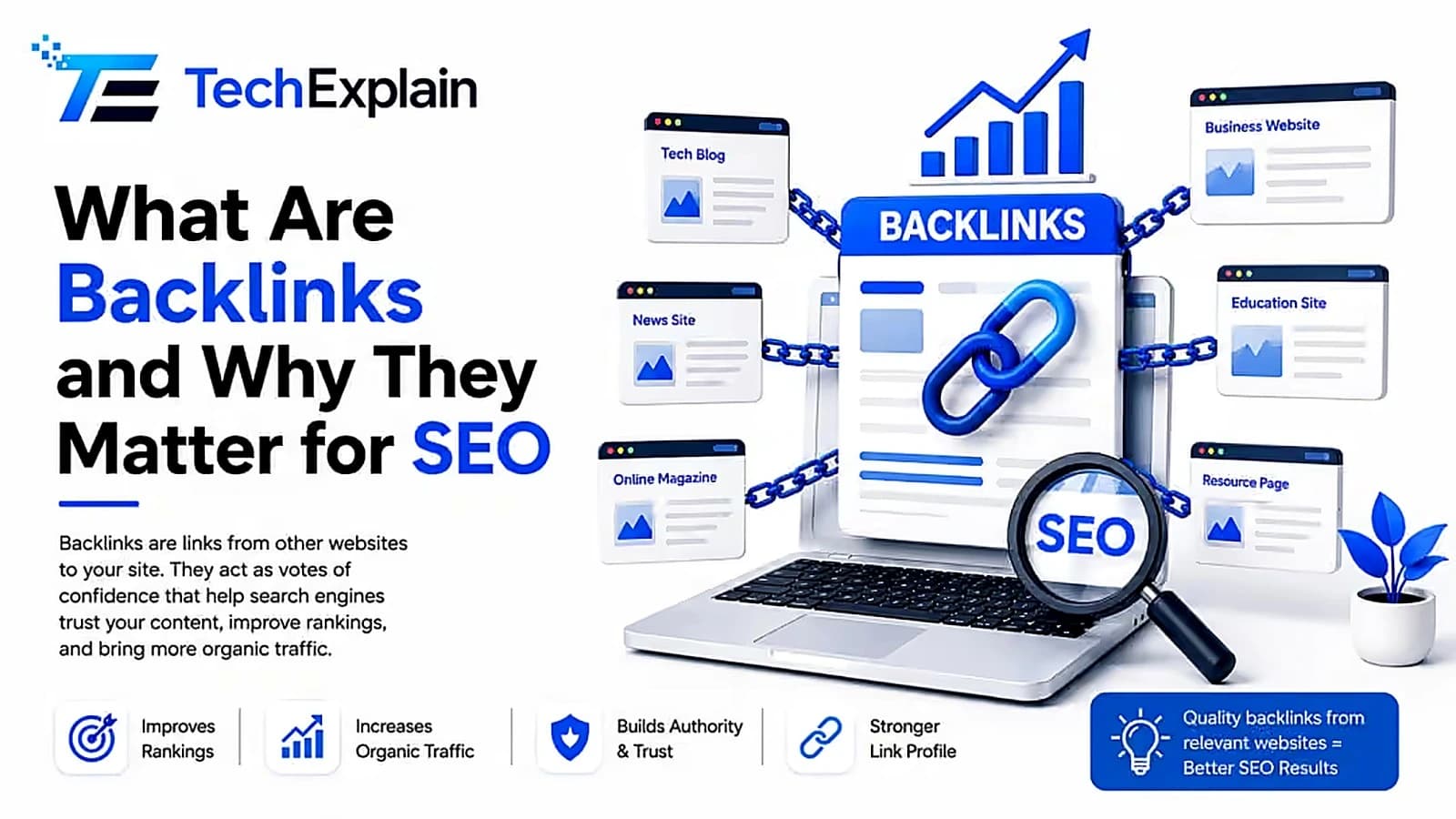
Backlinks are links from other websites that point to your web page. Search engines treat them as votes of confidence. They matter for SEO because high-quality backlinks signal trust, boost your site authority, and help you rank higher in search results and AI-generated answers
If you've ever tried to optimize your website for Google, then you know that the term "backlinks" appears everywhere. It's included in almost all SEO guides, marketing blogs, and even discussions of ways to increase rankings. But what is it and why do so many people spend so much effort getting their backlinks? To begin with, backlinks are links from other websites, leading to yours and represent the most powerful trust signal for search engines when ranking websites. Irrelevant whether you own a blog, an e-commerce site, or a business website, knowing how backlinks work and how you can benefit from them can help you significantly increase your visibility on Google. In this article, we'll explain the basics of backlinking in a way that is easy to comprehend by anyone, even those who are just starting to familiarize themselves with SEO.
What Is a Backlink?

Backlinks are nothing more than links from a different website that lead back to your website. For instance, suppose you write a useful blog post related to proper nutrition and another website refers to your post and provides a clickable link for it. This link will be considered a backlink. As far as you are concerned, it will be referred to as an inbound link since it will be linking back to your site.
The backlink is also referred to as a "vote of confidence." If one site is linked to another, it can be viewed as, "I trust this information enough to direct my traffic towards it." It makes the site look more credible both to the human audience and to the search engines due to the increasing number of such votes.
How Do Backlinks Work?
For you to understand the importance of backlinks, you need to have some knowledge of the process through which Google determines which pages should be ranked highly in search engine results. Google makes use of computer programs known as crawlers or bots. These bots navigate the internet, linking page by page. In the process, the crawlers make records of the linked pages.
If a crawler discovers a link directing people towards your website, here is what happens. Google first discovers the relationship between the two websites. Secondly, it analyzes the quality of the website that is linking to your page. It is important to note whether the website linking to yours is credible and well-known or if it is an unreliable website. Finally, Google will analyze if there is any connection between the content on your website and the content on the other website.
All of this being considered, Google incorporates the backlink into its bigger calculation of the authority and credibility of your page. Websites that are able to establish themselves as having a substantial amount of backlinks from credible sources will end up ranking high for the keyword searches. This is a theory that has been around since the very early days of Google. When Larry Page and Sergey Brin, Google's founders, created the PageRank algorithm in the early years, it included the concept of using backlinks to evaluate page authority. Although Google's algorithm has advanced greatly since those early days, this core principle remains.
This is a brief rundown of the behavior of various links, which you can use as you continue reading:
Link Type | Passing Ranking Value? | Where You Usually See It | SEO Value |
Dofollow | Yes | Editorial mentions, articles, guest posts | High |
No follow | No | Blog comments, forums, social media | Low to moderate (still useful for traffic and visibility) |
Sponsored | No (labeled as paid) | Paid placements, advertisements | Low (not meant to boost rankings) |
UGC (User-Generated Content) | No | Comments, forum posts, reviews added by users | Low |
Why Backlinks Matter for SEO
Here are some of the reasons that have kept backlinks among the top discussed elements in SEO.
They act as trust signals. Search engines cannot “read” your website like a human reader would. Search engines do not have any way to determine on their own if your information is useful or simply fluff. Backlinks provide search engines with external proof that your information is useful enough to be cited by others.
They help search engines discover new content. When crawlers get information about a new page through a link on an already existing site, it becomes easier for Google to locate and index the new page. There may be cases where a newly created website does not have any backlinks; hence, it is not easy for search engines to locate it.
They can bring in direct traffic. However, not all of the advantages of having backlinks are related to ranking in search results. For example, if you have a link on a popular website, some of the website's visitors will be interested in visiting your site as well. The process is referred to as referral traffic. It means that you gain a totally new audience for your brand.
They build long-term authority. Websites that continue to receive backlinks from high-status sites within their industry have the tendency to acquire what is known as domain authority or page authority. Although this does not belong to any Google measurement scale, this is an important score system used by SEO companies which attempts to assess how well a website might perform in terms of search results.
They are harder to fake than other ranking signals. Backlinks are generated from an external source; they cannot be easily manipulated in comparison with other sources that are within the domain of your control, such as keywords and titles. This is one of the reasons that Google gives high weightage to backlinks. Backlinks generated from respected sources are hard to fabricate.
Not All Backlinks Are Created Equal
The first thing you need to know about backlinks is that their quality should matter much more than quantity. One good backlink from a reputable and authoritative source is worth way more than fifty irrelevant, cheap, or spam backlinks from unknown sources. Moreover, too many low-quality backlinks can even harm your site and its rankings in Google because Google is engineered to see through such manipulation.
There are different kinds of backlinks that you should be familiar with.
Do-follow links: Anchor text links are the default backlinks. Anchor text links transmit ranking value to your web page, which is known as “link equity” by SEO experts. These are usually the most useful backlinks that can help you improve your search ranking.
No-follow links include a bit of code that will tell the search engines not to transfer any ranking value to that specific link. These can be found in comments, forums, and on paid-for pages, because site owners do not wish to give away ranking value for free to anyone just by posting a link there. However, nofollow links can indeed generate traffic and create brand visibility.
Sponsored Links: They are also used to identify paid listings, like ads, and they help the search engine understand that the link was created as a result of a business deal rather than an editorial choice.
User-generated content (UGC) links: These links are created by regular people, like those found in blogs and message boards, and are not as credible as the links provided by the editorial staff of the site itself.
When assessing the value of backlinks, the placement of the backlink is also of importance. Links that are embedded naturally in the body of an article surrounded by the content have greater significance compared to links that appear in the footers or sidebars of websites.
How to Earn Quality Backlinks

With all the importance given to backlinks, it is natural for most website owners to wonder how to get them in greater numbers. However, while SEO continues to progress, the basic principle behind this approach remains unchanged.
The most effective method of creating backlinks is by producing content that others really want to use. You could be providing people with a guide, research, a tool, or just answering a common question with a good article. The moment you produce the best content regarding a specific matter, it becomes inevitable for other sites to refer to yours.
Networking within your field is also important. Contacting bloggers, reporters, or website owners who write about your topic and giving them something that is of genuine worth in return, whether it’s a blog post or a quote from an authority figure, could yield natural editorial backlinks.
Fixing broken links from other sites can help too. When you spot a link to an old or dead resource somewhere, try contacting the site administrator and offering your own content as a link alternative. In this way, you will not only get an additional backlink but also make a contribution to the improvement of someone else’s content.
In addition, it should be mentioned that a combination of backlinks with a logically structured website will be much more efficient. Specifically, the presence of internal links, i. e., those that are established between various pages of your website, will allow search engines to perceive your web content.
A Word of Caution
All methods for acquiring backlinks are not necessarily good. Bulk purchasing of links, taking part in dubious "link exchange" services, or posting a backlink to your site through unrelated comments may seem like an easy way out, but the Google algorithms have become adept at identifying such practices. Even more, Google uses algorithms that are explicitly designed to identify manipulative link-building practices and lower the ranking of such sites, including the well-known Penguin update algorithm.
Final Thoughts
Backlinks still represent one of the most reliable ways to show search engines which sites are worth ranking high in the search results. They are the votes of confidence coming from all over the Internet and telling Google that other people and websites find your creation valuable. Although methods of acquiring such links changed together with the evolution of search engines, the principle has stayed unchanged for many years now – make content valuable enough, develop connections in your field, and backlinks will come by themselves. Those website owners who follow this path usually gain the sort of authority which is impossible to get otherwise.
Frequently Asked Questions
What is a backlink in simple words?
Backlinks are nothing but links that exist on other websites, which lead visitors to your website. It serves as a referral for both users and search engines to view the content available on your website.
Do backlinks still matter for SEO in 2026?
Yes. Backlinks are among the most powerful ranking factors that Google takes into consideration. The difference lies in the focus on quality and relevance rather than just the number of backlinks, as well as the contextual relevancy of content to the site’s subject matter.
How many backlinks do I need to rank on Google?
There is no definite figure for that matter. A website can get great rankings with just a few links, while another one can have many irrelevant links and no ranking whatsoever. Quality should always come before quantity in this case.
What is the difference between do-follow and no-follow links? Do-follow links carry over the ranking value from one web page to another, and this could affect your ranking on the search engines. No-follow links do not carry over the ranking value, but they could drive traffic and visibility of your brand.
Can too many backlinks hurt my website?
However, yes, if you are getting links from sites that are irrelevant or low quality, or links created by paying for them or exchanging links, this is something that the Google algorithms will pick up and could decrease your rankings as a result.
What is the fastest way to get quality backlinks?
In reality, there are no shortcuts. The best way to do this is to produce some valuable content, for example an article, a research paper, etc., and then establish connections with related sites and bloggers in your industry who would like to link to your site.
Are internal links the same as backlinks?
That’s incorrect. Backlinks can only come from another website, but internal links are links between different pages on your own website. They’re both important, and good organization and internal linking can help distribute the value of your backlinks.
Share this article
Related Articles
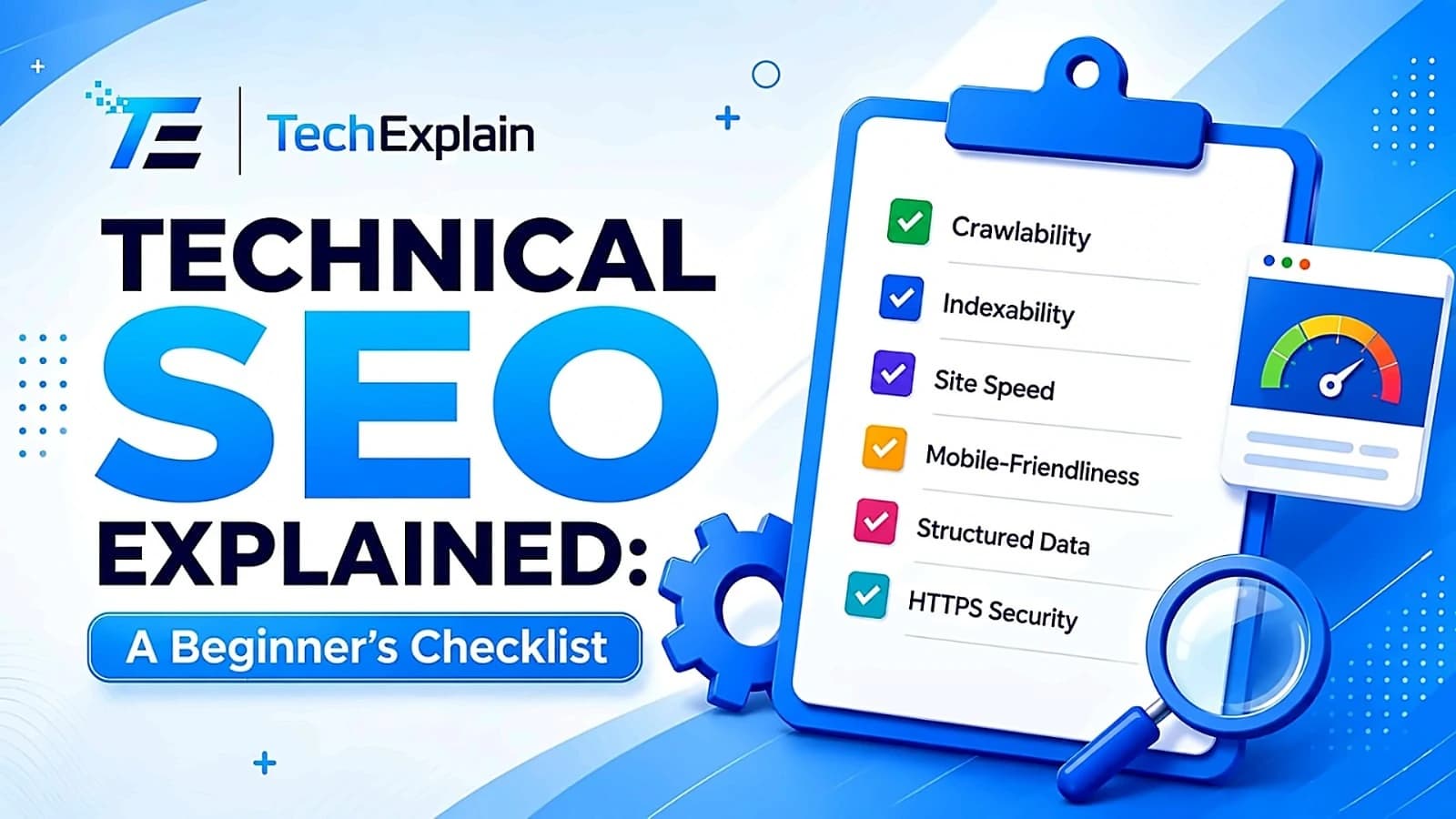
Technical SEO Explained: A Beginner's Checklist
This guide breaks down technical SEO into a simple checklist so beginners can find and fix the issues stopping their site from ranking.
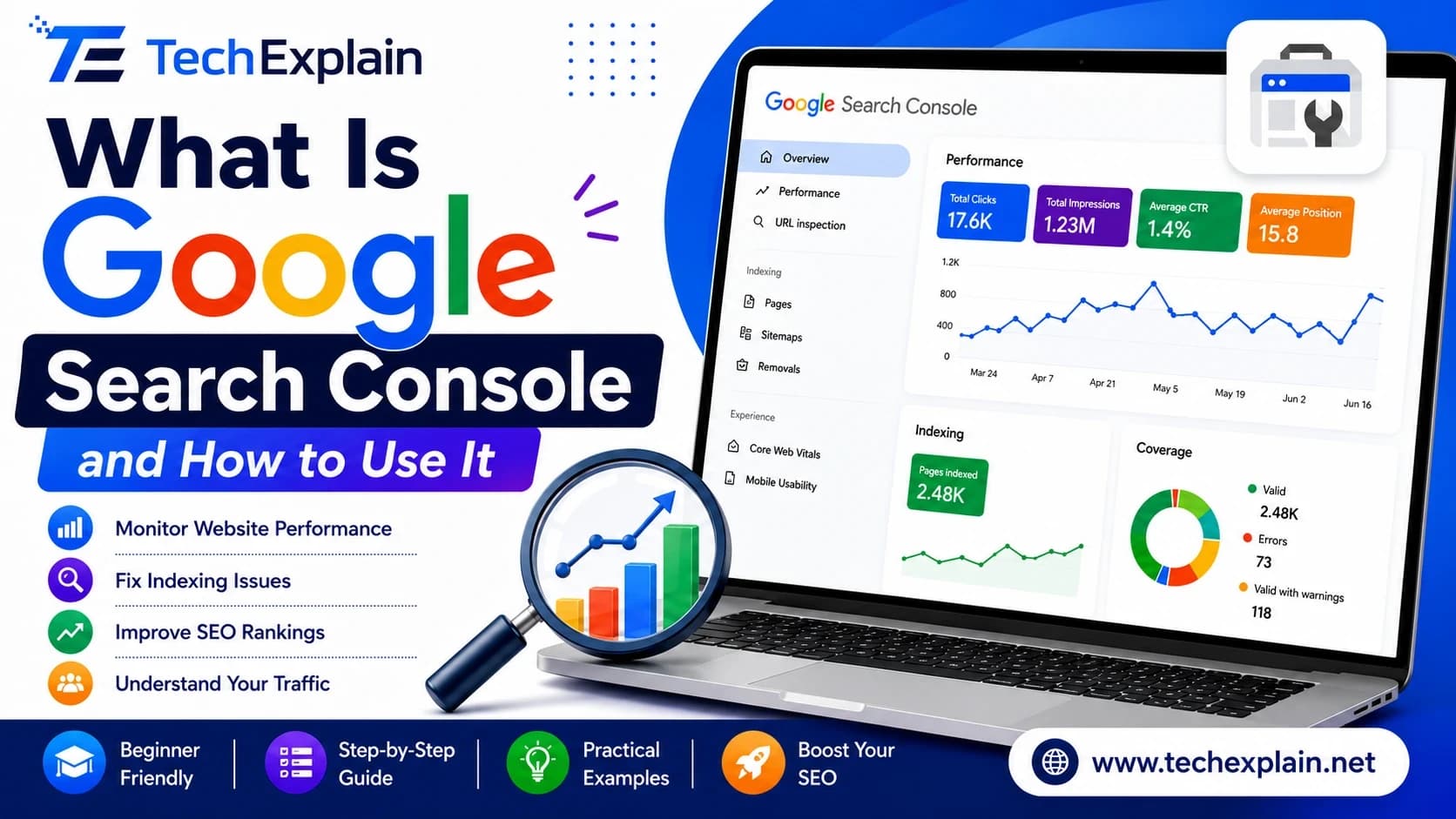
What Is Google Search Console and How to Use It
Google Search Console is a free Google tool that shows how your website performs in search, helps fix errors, and boosts your SEO.
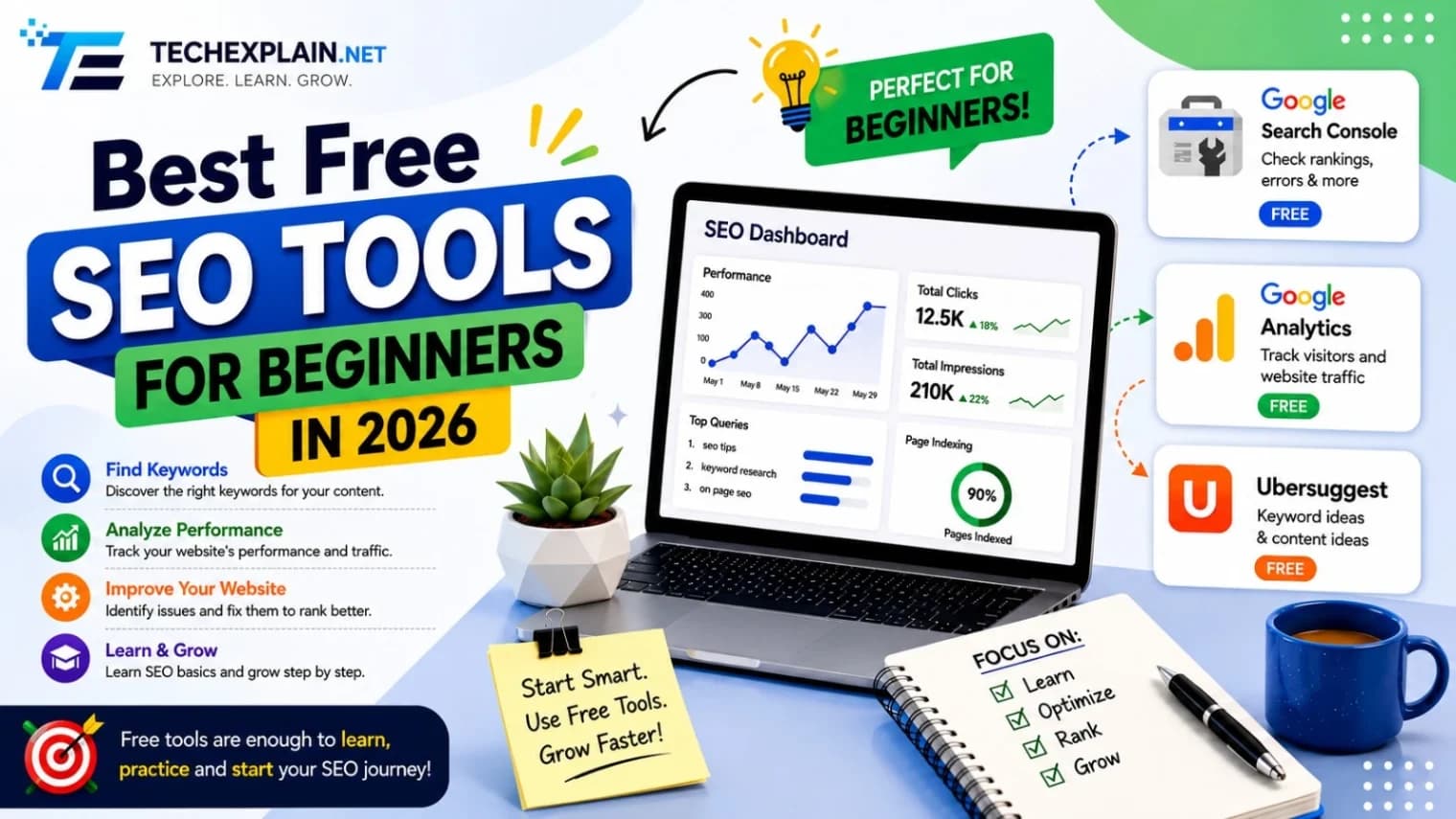
Best Free SEO Tools for Beginners in 2026
This article lists the top free SEO tools you can use in 2026 to research keywords, fix website problems, and get more visitors from Google, without paying anything.