What Is the Internet and How Does It Actually Work?
A simple, easy-to-read guide that explains what the internet is and how it actually works behind the scenes.
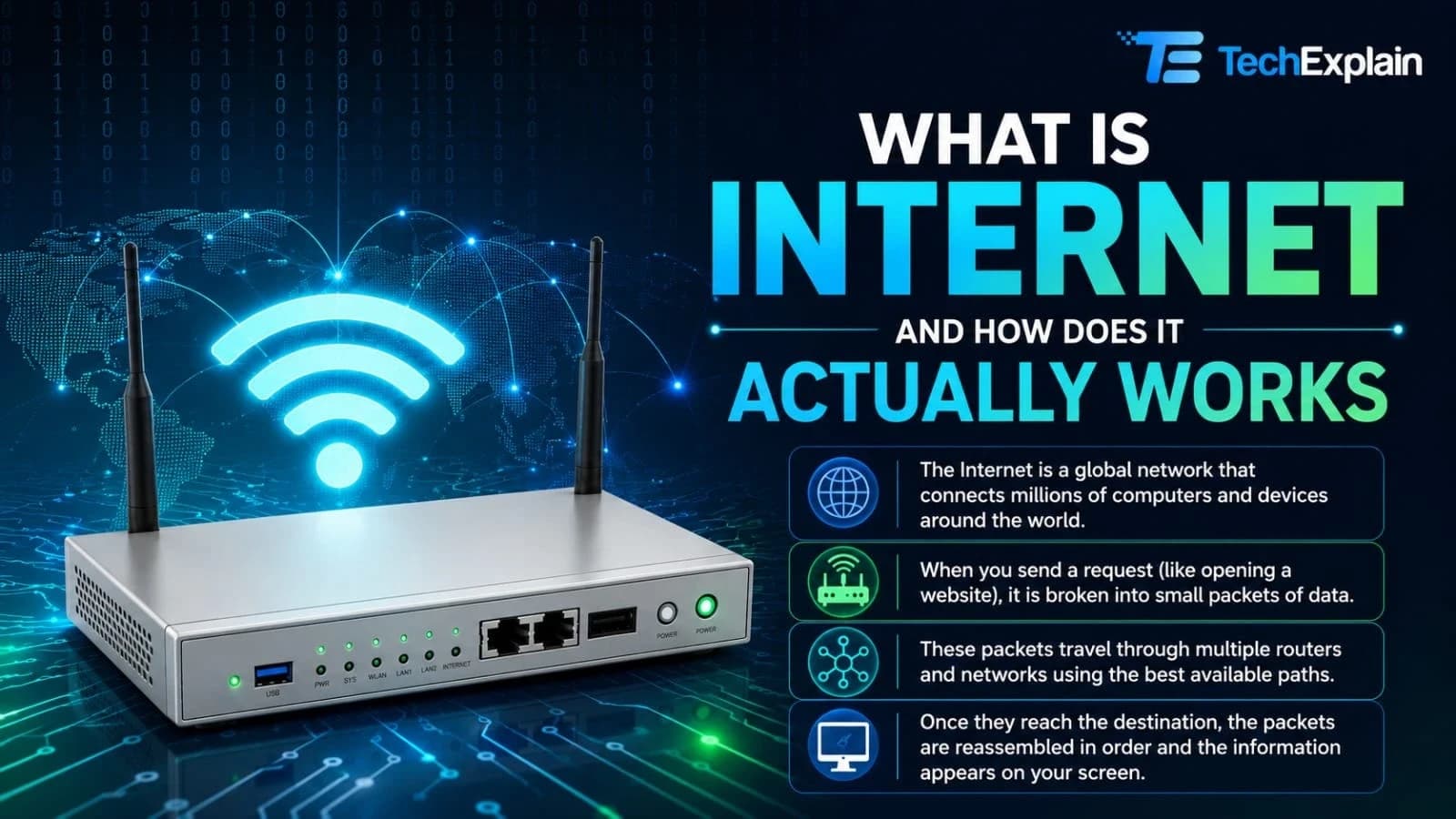
The internet is a massive, physical global network of connected computers, servers, cables, and routers that share data using standardized rules called protocols. It works by breaking information down into tiny chunks called packets, sending them through a web of physical wires and airwaves using unique IP addresses, and reassembling them at their destination.
Everyone uses the internet daily. From sending emails to streaming videos, from purchasing things on the internet to doing homework, reading books, working, communicating with friends and relatives in other countries, the list goes on and on. But the vast majority of people do not think of asking the most basic questions, such as what exactly the internet is and how it operates. We all just open the application or the website we need and, in a matter of seconds, get our results, without any thoughts about what the path of the requested information was. The truth is, the internet is one of the greatest inventions humans have ever made. It connects millions of devices and sends tremendous amounts of information each second using principles that are quite simple. In this article, we will give a clear explanation of what exactly the internet is and how it has evolved and what really happens when you send a letter or stream a video online.
What Is the Internet?

The easiest way to explain what the internet is would be to describe it as a gigantic network that consists of a number of smaller networks connected together. The term "internet" actually stands for "interconnected networks." The internet is not a single huge computer that exists somewhere on Earth but millions of devices, such as computers, servers, routers, cables, and even satellites, which operate according to certain common protocols.
Consider the internet in much the same way as the postal service that is used globally. Just as a letter may originate in one country and transit through numerous post offices before getting to the destination address, the information that is transmitted through the internet will go through a number of different places before arriving at the user's cell phone or computer. The postal service does not really mind what is in a letter and all that it does is transport the letter from point to point. The internet does something very similar. It is indifferent to whether the information is in text form, a picture, a video, or even a transaction.
Also useful to remember is the fact that the internet and "the web" are two different things despite the fact that the terms are frequently used to refer to the same thing. The internet is the actual infrastructure and technology, which includes the cables and the connections between the devices. The web is just one of the many services, which is provided by the internet and consists of the websites and web pages accessed through a browser. Video calls, email, and online gaming are other services provided on the same internet.
A Short History of How the Internet Began
However, the internet did not suddenly emerge out of nowhere. The process of its development started several years ago with the emergence of a limited connection between several computers used mainly for scientific and military research purposes. At that time, very limited connections were made, and the notion of an average person being able to use the internet from their own home seemed to be completely unrealistic. With the development of technologies, the limited and closed system gradually evolved into something else.
Today, the internet links millions of people together and an enormous number of websites, and is expanding daily because of more and more people connecting to it each day. This idea that once began as just a small test with just a few computers has turned into the biggest network constructed by mankind and plays an important role in many aspects of our lives today.
How Data Actually Travels Across the Internet

That is where the fun begins. The data that is transferred through the internet when a message is sent, a webpage is opened, and a video is played is not done in one single chunk. It is divided into various little chunks known as packets, each carrying some portion of the message and information about its source and destination.
When these packets are formed, they move independently within the network using various routes, although they end up at the same destination. They go through routing and switching equipment that acts as a traffic conductor, checking the address of each packet and directing it to the appropriate route in a way that is similar to how a postman checks addresses when delivering mail. Due to this clever arrangement, if one route is busy or congested, the packets can always be directed to another route. Once they are all received, they are reassembled in their correct order, and then the entire message, image, or video shows up on your computer screen within seconds.
In order for the system to work, each of these devices that is connected to the internet has to have an address of its own. The address is known as an IP address and acts as the postal address for every home. It helps other devices to determine the exact location from where the data should be sent. With more and more devices, including smartphones and smart TVs, connecting to the internet, the requirement for these addresses is increasing.
The Role of Cables, Wi-Fi, and Satellites
The internet is viewed by many to be wireless and something that exists in thin air. However, there are some parts of the internet that are very tangible and even comprise its main structure. These include the large fiber optic cables, which are not only used on land but also underwater, linking continents to each other through massive data transfers at extremely high speed. Along with these tangible cables, we have wireless technologies such as Wi-Fi and mobile data to help our devices connect to the larger network.
Satellites have also become an integral component in the process of accessing the internet in remote areas where setting up physical links would be difficult or expensive. It is through this combination of the three approaches physical links, wireless, and satellites that information has been made to travel across the world within such a short time.
Where Websites and Data Actually Live
Whenever you visit a website, the content displayed there – the texts, images, and videos – must first be stored somewhere before being sent to your device. And here comes the use of data centers. A data center is a huge facility with computers, also known as servers, which store different websites, applications, and online services round the clock. Whenever you enter an address of a website in your browser, your request reaches the internet, finds a server storing the particular website, and gets the information sent back to you in seconds.
Big corporations have a number of data centers located all over the globe in order for people in other parts of the world to access the same site instantly instead of having to wait until the information has reached them after being transmitted from the other end of the earth. This is why data centers consume so much energy and require cooling because there are a number of servers operating at the same time, producing quite a bit of heat and requiring a constant supply of electricity in order to remain operational.
Why the Internet's Simple Design Is So Powerful
Among the many impressive aspects of the Internet is its remarkably straightforward functionality. Its only true function is to transmit information from point A to point B and treat all information the same. Irrespective of whether the information being transferred is a message, image, live video call, or financial transaction, it is handled by the network in the same manner.
The simplicity is indeed the biggest strength of the internet. Since the underlying network does not have to know anything specific about the particular kind of application, applications can be developed using the existing framework of the network, without modifying the network itself. That is exactly what has allowed so many different applications, ranging from voice over IP, shopping, social networking, etc., to evolve on the exact same framework of the internet, without having to build a new version of the internet for each innovation.
Why Understanding This Matters for Everyone
It does not take a computer engineer to learn about the way the internet functions. It gives you insights into why the video call would lag in the case of a weak Wi-Fi connection, why the web page loads slowly at peak times, and why certain services are dependent on reliable internet connections in the particular region. It makes us realize how much effort goes into sending a single email or opening a webpage.
The more aspects of daily life that become digitized, such as education, medicine, business, and recreation, the more valuable is knowledge of the global Internet structure. It makes individuals capable of making more informed decisions on what kind of Internet access to have, what benefits can be derived from a reliable network connection, and to realize the enormous effort of engineering that goes into its creation.
Frequently Asked Questions
1. What is the internet in simple words? The Internet is a massive network of computers, servers, and devices worldwide, which are all linked to one another, operating on the same set of rules for sharing data amongst each other.
2. Is the internet and the web the same thing? This statement is not correct. The internet is what actually constitutes the network, while the web is only one of many services running on the internet, which consists of websites and pages that are accessed using a browser. Other examples of services include email and video calling.
3. How does data travel across the internet so fast? Information is divided into tiny bits referred to as packets, which move independently through the routers and switches by taking whatever route is fastest at any one time, and are reassembled in the correct order when they get to you, usually within a fraction of a second.
4. What is an IP address? IP addresses refer to unique addresses that are assigned to all devices connected to the internet. This is similar to house addresses since it provides directions for sending data to the required destination.
5. Does the internet only work through Wi-Fi? The internet is a combination of physical infrastructure such as fiber-optic cable networks, even those located underwater in the ocean, and wireless technology such as Wi-Fi and satellite communication systems.
6. What is a data center, and why does it matter? A data center is a building that contains high-end computers known as servers in order to host websites and applications on a constant basis. Every time you access a website, your request reaches the data center that houses the particular website in question.
7. Who owns or controls the internet? The Internet does not belong to one individual, organization, or nation. It is composed of several networks owned by various entities from across the world that work on the basis of an established set of rules and agreements in order to facilitate connectivity.
8. Why does my internet sometimes feel slow? There are many possible causes for slow internet connectivity; some of these causes include poor Wi-Fi connectivity, multiple devices connected to one network, busy website servers, or high network traffic during peak times.
Conclusion
Although the internet appears quite common and simple due to its frequent use by people, its functionality and performance have been made possible by an excellently constructed global network system. This network interconnects millions of devices around the globe through some standard protocols, fragments the data into packets for independent transport, and uses wired connections as well as satellite links in transporting information over large distances within a matter of seconds. The flexibility of the internet's design is precisely why it has accommodated a wide range of technological advancements ranging from email to video calling and web shopping.
Remembering the incredible journey your bits of information travel each time you communicate, watch a movie, or access a website could be the most important reminder you have, seeing as how they travel across networks worldwide, through cables and routers in the blink of an eye just to give you your desired response right before your eyes.
Share this article
Related Articles
What Is Bandwidth vs Internet Speed? Explained Simply
Bandwidth is how much data your connection can carry, while speed is how fast that data actually moves.
5G vs Wi-Fi 6: Which Is Better for Your Devices?
5G is fast internet for outdoors and travel. Wi-Fi 6 is fast internet for home and office. Using both together works best.
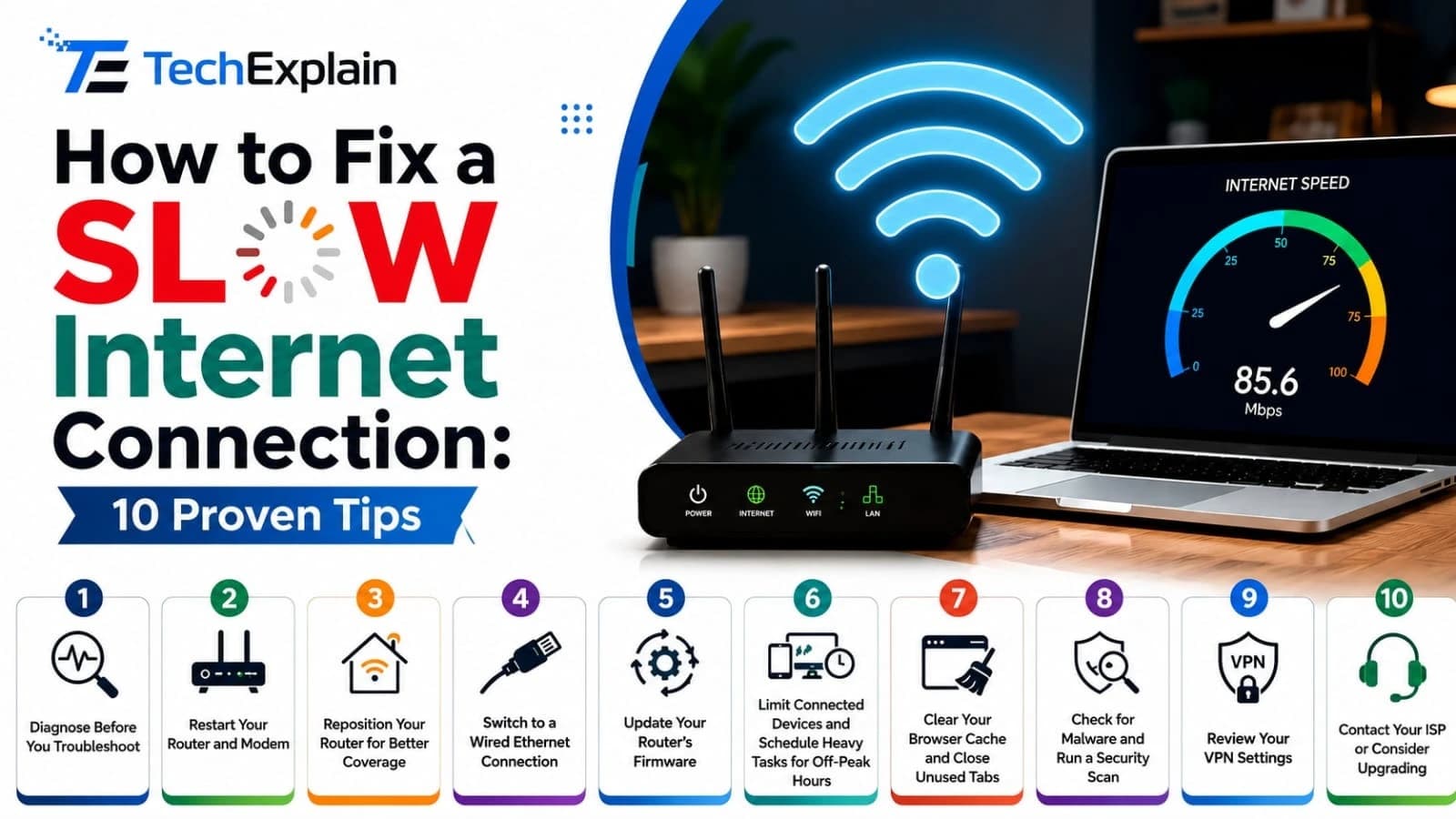
How to Fix a Slow Internet Connection: 10 Proven Tips
This guide shares 10 simple, tested tips to find out why your internet is slow and fix it fast.